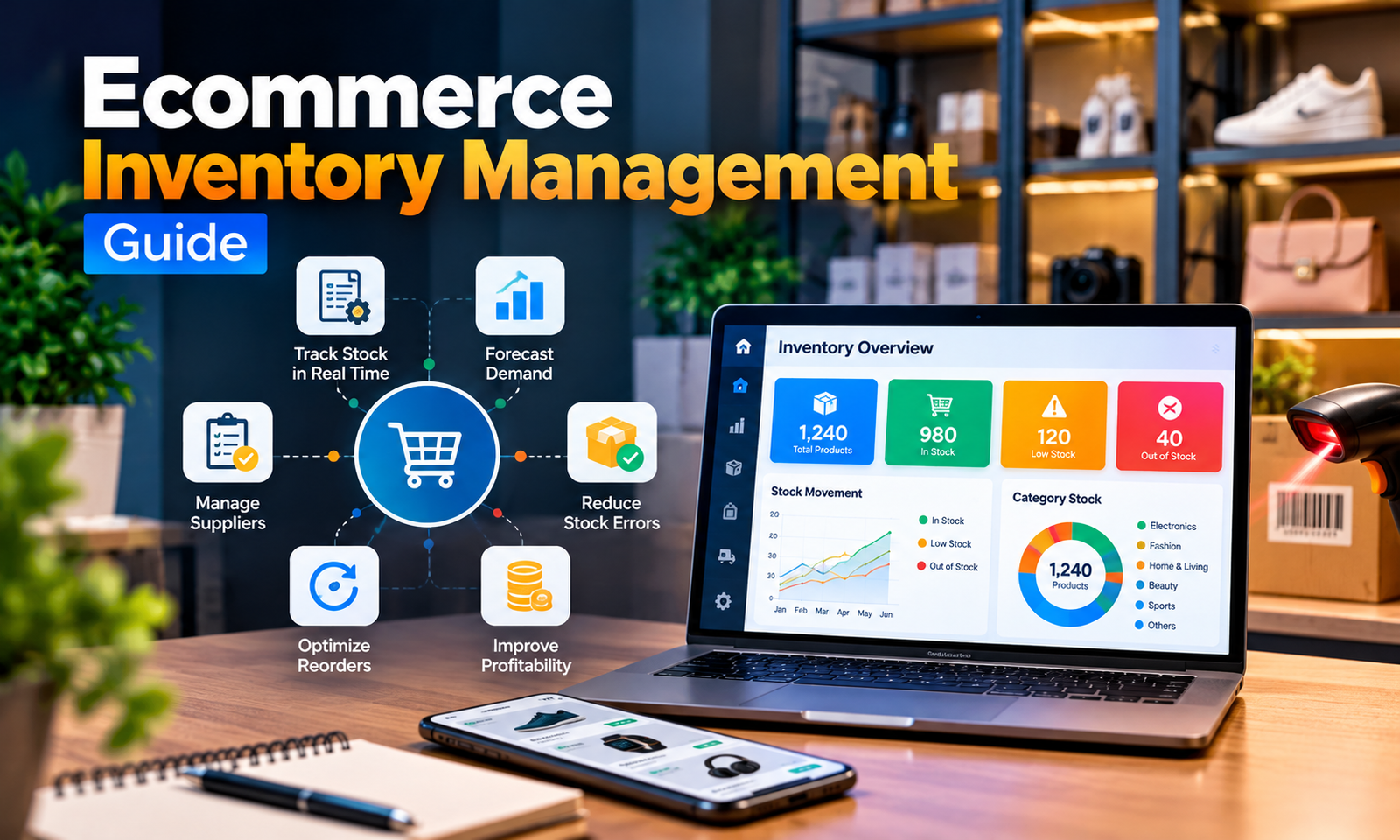
Crafting an online store is not merely about drawing in customers and taking payments.Just as if you were running a brick-and-mortar store, you need far more than a way to attract customers and take payments when you’re running a store online. Products should be readily available and properly documented and ready for delivery. A good ecommerce inventory management system will tie up buying, storing, selling and fulfillment together, as one system. If a business isn’t aware of what stock it has, they could be the ones who end up falling short of their customers’ expectations or end up buying too many items that they never sell. This guide will discuss some practical methods on how to manage the inventory in an ecommerce business.
Help build an Accurate Inventory Foundation
The first step to helping ecommerce businesses run successfully is to have trustworthy product records. Each item and variation must have a specific stock keeping unit, proper descriptions and a specific storage location. Make sure that you don’t oversell physical stock and reserved orders.
Organize Products and Stock Movements
An e-commerce inventory management system that keeps a track of incoming deliveries, transfer, purchases, sales, returns and damaged products. Record movements promptly. If there is/was consistency with the inventory management workflows in ecommerce, the same transaction/records can be understood without confusion by both the warehouse and/or the store front administrators.
For ecommerce inventory management, there are five key controls to consider:
- Use a different SKU for each variation of a product that can be sold.
- Distinguish between available and reserved customer orders.
- Only record supplier deliveries after inspection.
- Monitor damage and return items using different statuses.
- Regularly compare actual numbers with electronic records.
They help to make inventory more reliable with the growing number of product catalogs in ecommerce. These also help to aid the purchasing process.
Predict Demand and Order Stocks.
An ecommerce inventory management system strikes a balance between having the right products available and the cost of having them. Before ordering the products look at the past sales and promotions, seasonal demand, and reliability of the supplier. Make actual forecasts, rather than forecasts based on a change in sales due to promotions.
Calculate Reorder Points and Safety Stock
Reorder point is a simple one that equals average daily unit sales times the lead time of the supplier plus safety stock. If selling ten units per day, for example, and it takes seven days for this to become available, then it will need to be seventy units before a buffer is added. The buffer needs to be flexible enough to adjust to the variation of demand and uncertainty of delivery and not a specific percentage.
Whenever there are changes in demand, it is wise to revisit these assumptions when it comes to strong ecommerce inventory management. It is also important for businesses engaged in inventory management ecommerce to keep track of the suppliers’ delay and minimum order quantities as they both have an impact on the flexibility of purchasing. Regularly check out popular products. It’s a continuous process that demands constant attention for effective inventory management ecommerce.
Coordinate Sales Channels and Warehouses
When a website, marketplace and physical shop are stocking the same products, it can be more difficult to do multichannel ecommerce inventory management. There can be problems of overselling, bookings cancelled and issues with Customer Service because of delayed updates. Centralized records lessen these risks by sharing the correct availability data across connected channels.
Real-time Stock Availability with Connect Fulfillment.
Ecommerce inventory management software will be able to track the location of products and determine if they are able to meet certain orders. Create reservation, transfer and fulfillment policies, taking into account availability and shipping needs.
Ecommerce returns processing needs to be done in a disciplined manner too in order to be a part of the modern e-commerce inventory management system. Don’t automatically make the returned products ‘perfectly saleable’. Check, update and record their status and any changes before restoring availability. This puts the e-commerce inventory management on the straight and narrow path after refunds and exchanges.
Choose software that works for day-to-day activities.
When selecting e-commerce inventory management software, it’s important to dissect the current workflows in advance and then look through the features. The retailer has to have the features that are suitable to their level of complexity. Test integrations that integrate the actual storefront, marketplaces, accounting services or any other fulfillment partners.
Prioritize these capabilities when evaluating e-commerce inventory management software:
- Seamlessly align inventory from all connected selling channels.
- Create alerts based on products reaching replenishment levels.
- Provide support for Barcode & Structured Receiving Flow.
- Log in transfers, returns, adjustments and user activity.
- Offer reports of stock and availability on-demand.
It’s also essential that the inventory management solution for ecommerce is easy to understand, dependable, and has a clear implementation expense. Try out standard situations with sample products prior to committing. When staff members can follow a streamlined process, instead of getting bogged down in unnecessary features, E-commerce inventory management is improved.
Measure Performance and Correct Inventory Errors
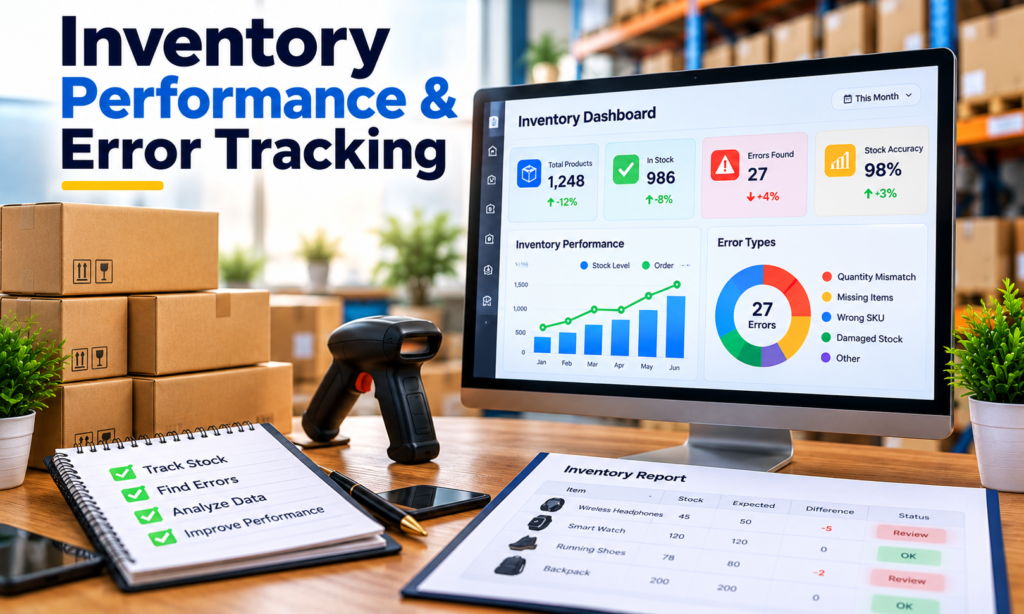
It takes measurement, not periodic visits to the warehouse to make regular E-commerce inventory management possible. Track the inaccuracy of stock, stock-outs, sell-through, inventory turnover and aged stock. Read and understand metrics along with margins and seasonality.
Use Cycle Counts to Investigate Discrepancies
Selected products are counted on a regular basis, rather than an annual count for cycle counting, to check for products. Focus on valuable / fast moving SKUs, explore the differences and record their explanations. Errors can be caused by a variety of receipt errors, lost items, returns or late updates to the system.
Whereas, teams running eCommerce inventory management software can review and look at adjustment histories and schedule reviews. But if processes are not good, this can’t be fixed by itself with automation. To achieve good inventory management in ecommerce, it’s important to carry responsibility, staff training and handling exceptions regularly. Check for any recurring discrepancies, to avoid redoing work.
Develop a Sustainable Improvement Routine (SIR).
Great ecommerce stock control is built up by incremental improvements in the way that stock is managed. Start with correct records, setting reorder rules, and linking critical channels and measuring results. Develop automation in conjunction with understanding the processes. This paves the way for easier diagnosis of the problems.
A reliable inventory management system for eCommerce ought to allow for regular inventories and straightforward claim to changes. In the meantime, inventory management ecommerce reporting uncovers forecasting holes. Apply those learnings to make changes in supplier contracts, product combinations and reordering systems.
Conclusion
To be effective, ecommerce inventory management must rely on accurate data to inform good business decisions on ordering, storage and delivery. The key focus areas for businesses are to ensure they are visible, to be realistic about forecasts, to count well and to have connected systems. When choosing ecommerce inventory management software, you’ll be able to minimise manual tasks, but you need to have consistent processes in place. A review system for ecommerce can help with sustainable growth.
Frequently Asked Questions
1. What is ecommerce inventory management?
Ecommerce inventory management provides the ability to monitor various product details like quantity, location, movement and availability throughout the online selling process.
2. How regularly should stock records be taken?
Do regular cycle counts of critical products; and implement a scheduled cycle count plan based on the sales velocity, value and error history.
3. Can smaller stores use inventory software?
Yes. If ecommerce inventory management software features align with the smaller merchants’ needs, it can assist them in cutting down manual updates.
4. How does safety stock prevent shortages?
A safety stock buffer is to protect against sudden or unforeseen increases in demand or delays by suppliers, but it is not foolproof and can’t stop every shortage.
5. How is effective inventory systems achieved?
An ecommerce inventory management system will have effective stock management practices, all the way down to using a reliable record-keeping system, getting proper updates and having useful integrations and a consistent procedure amongst staff.