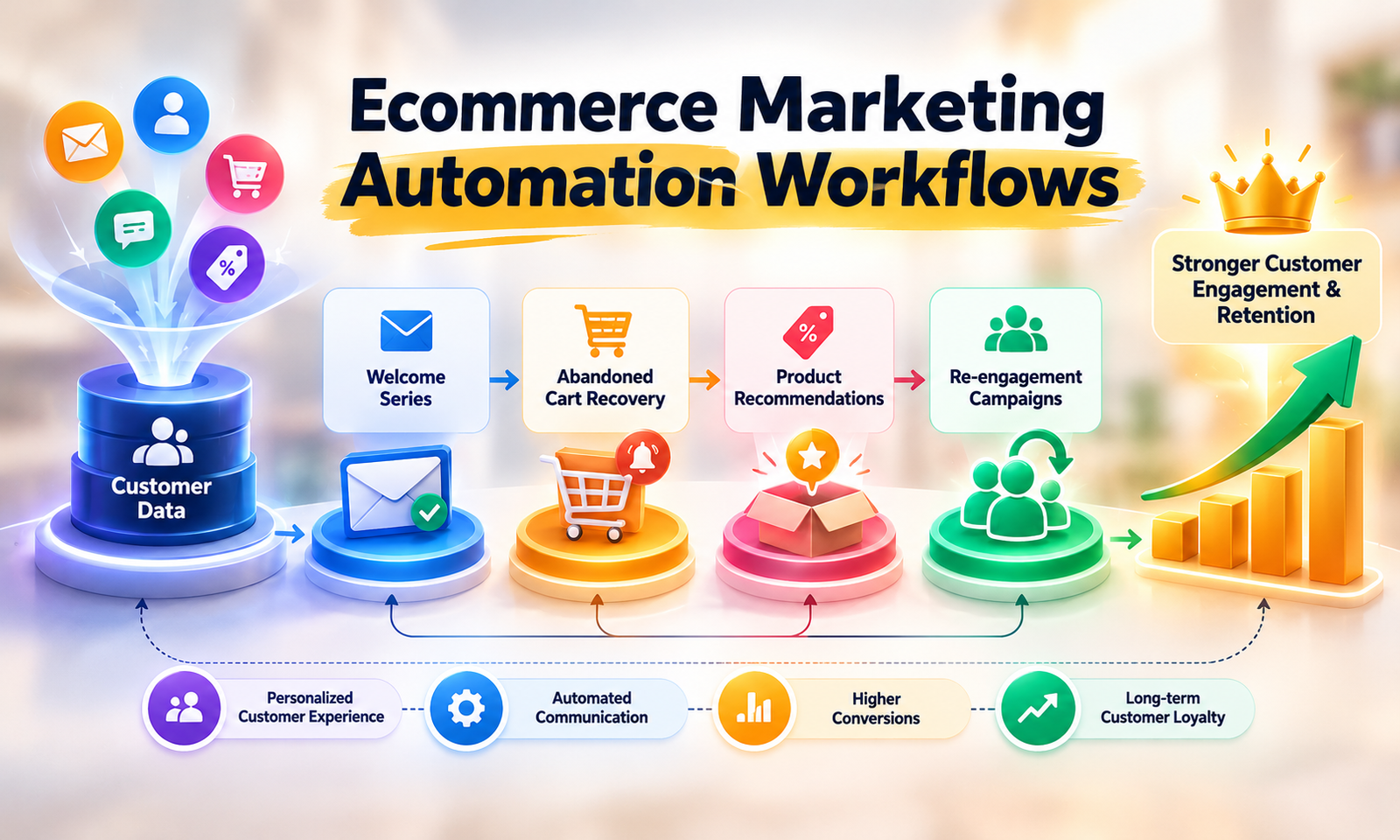
Online stores gather details about their customers, but don’t necessarily use it to create timely communication. Consumers: They look at products, drop off carts, add to carts, make purchases, and then come back – and each of these touch points must be dealt with in an effective manner. Ecommerce marketing automation links these moments together with messages that are sent when customers do this or that – rather than just using manual marketing. If well thought out, ecommerce marketing automation can assist retailers in communicating in a consistent manner while also honoring customers’ desire and purchase plans.
Aligning Ecommerce Marketing Automation with Customer Intentions
The first step in e-commerce marketing automation is gaining the trust of customers, having measurable goals, and having reliable customer events. A workflow should be designed to tell when the workflow has been triggered, how to decide if the person is eligible for the workflow, provide useful information, and end when it is done. The key to e-commerce marketing automation is to differentiate between users who are web surfers and those with a high likelihood of conversion by ignoring them as opposed to treating them with care.
Create meaningful Events and Customer Segments
Get the stores together, action orders and messaging before starting ecommerce marketing automation. Check that the subscription, start of checkout, purchase, refunds and product status (availability) updates properly. Know if a user is a new subscriber, rather than a repeat customer, and be able to tell if they are an existing customer or if they have stopped buying. These differences ensure that the offers that are sent are not irrelevant and make automated journeys easier to assess.
Essential Ecommerce Marketing Automation Workflows
There are various levels in the buying process, so differing messages are required. Instead of sending more notifications, e-commerce marketing automation should focus on more beneficial interactions that will meet the needs of your customers. Begin with some tried and tested workflows, evaluate them and then only broaden them if the data held by the customer is correct.
Welcome New Subscribers With Helpful Advices
A welcome sequence gets the brand introduced, gives a product overview and makes it clear on what to do next. Send a relevant introduction after signing up and informative material or buying tools using ecommerce marketing automation. For ecommerce, marketing automation should respect the initial promise of signing up the new subscribers, and not encourage them to receive the same type of marketing message time and again.
Recover Abandoned checkouts without pressure
Customers who started to purchase items but didn’t finish paying are considered checkout recovery. Ecommerce marketing automation can help you send a personalized message to your targeted customers with reminders of the products you’ve chosen and easily direct them back to checkout. Be patient enough to allow people to get through a purchase, and don’t prompt reminders after they have made a purchase.
A second reminder could be related to delivery or to monetary issues. Don’t assume that you have to give them a discount as it not only means less profitability but could also lead to intentional quitting. Test it based on customers’ timings and don’t make blanket assumptions about timing.
Support Customers After Their Purchases
When you have an order you should start an ongoing service relationship, rather than another sales pitch. Ecommerce marketing automation can post the product instructions, care tips or appropriate set up after being shipped. Don’t put promotions in the midst of the transactional updates.
Posting of compatible products may occur with purchases that warrant suggestions for compatible products. Tracking delivery status and, perhaps, product usage should be taken into account when marketing automation is used for ecommerce and when asking for reviews and/or further purchases.
Encourage Replenishment and Thoughtful Reengagement
With the consumable products, there will be opportunities for reminders that are based on reasonable replacement periods. Ecommerce marketing automation can predict when a customer will be in need of another order, but it should take into account how many items were bought and their buying behaviours in the past. Customers who have ceased ordering can be sent an informative tidbit about products they can order or improvements made.
Don’t let a lack of activity be interpreted as “do it over and over again. Allow easy opt-out of communications and end communications when they opt out.
Creating controls that strengthen customer experience.
Exclusions are just as important as triggers and are key to good e-commerce marketing automation. For every workflow, rules for purchases, cancellations and unsubscribes, duplicate journeys, as well as unavailable inventory are required. If a customer has abandoned an order and they have finished the checkout process, they should no longer be reminded of this abandoned order.
Lead Channels and Honor Consent
Don’t use email, text and other communications as another way of doing the same thing. For ecommerce marketing automation, it’s essential that you have their consent, the correct frequency and adhere to the rules of messaging. Rather than reaching out to customers on any platform you can, use ecommerce marketing automation to ensure that you’re communicating with them that is relevant.
Pre-test each journey before activation
Generate customer profiles as samples and emulate customer subscription, checkout, purchase and cancellation events. Ensure that when using ecommerce marketing automation, the proper content is delivered, product information is accurate and the campaign ends when certain conditions are met. Before activation, make sure that mobile readability, broken links, inventory references and conflicting promotions are all correct.
Measuring Ecommerce Marketing Automation Performance
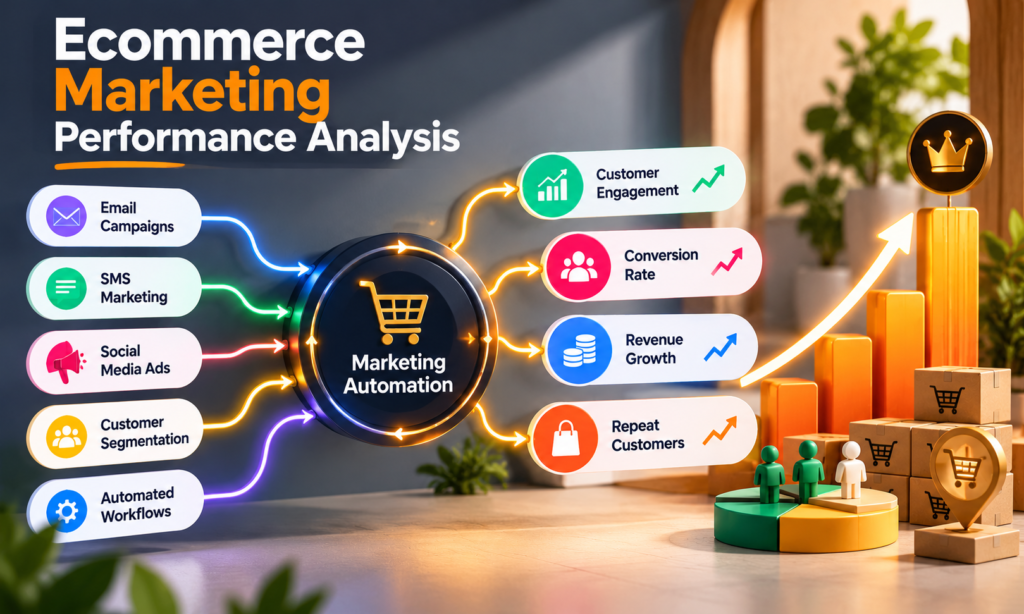
Reporting needs to link messages to substantive and valuable business results. While ecommerce marketing automation can impact purchases – it does not automatically mean that it impacts sales. Analyze and compare eligible customers to appropriate control groups and compare contribution post discounts, fulfilment costs and messaging costs.
Review Results and Improve Individual Steps
Track conversions, revenue per recipient, repeat purchases, unsubscribes and complaints, as well as delivery errors and failures. Marketing automation for ecommerce is more of a tool that can be used when team members recognize certain areas that can be improved rather than determining ecommerce success based on overall sales. For instance, if you have a lot of clicks and low purchases, it could just be that there are obstacles at checkout and not that the messaging is not effective.
Monitor ecommerce marketing automation frequently to get rid of stale offers, modify timing and fix any incorrect segments. Record any changes in order to be able to make comparisons later. Delegate responsibility for each workflow and look into any unusual increases in volume before the increase impacts customer trust and/or campaign success.
Conclusion
The key elements of ecommerce marketing automation that are essential for success are relying on reliable information, appropriate timing and moderation. Welcome, checkout recovery and post-purchase journeys should be used as a starting point for retailers and more segments should be introduced if there is opportunity for customer behaviour to benefit them. Regular testing ensures that ecommerce marketing automation is effective and doesn’t become too much of a burden to the company’s communication.
Frequently Asked Questions
1. Which Workflow is best for a small store to launch first?
If you are having subscriber onboarding to be inconsistent, use a welcome sequence; if you’re struggling with abandoned purchases, then use checkout recovery. Select based upon priorities.
2. Does automation take the place of my standard marketing campaigns?
No, automated journeys react to individual events and scheduled campaigns help with campaign launches, seasonal promotions and more. Both can be employed in conjunction with each other.
3. How to Avoid Sending Too Many Messages How Can Stores Avoid Sending Too Many Messages?
Establish limits on frequency, make priority trips, eliminate overlapping triggers, and promptly comply with opt-outs. Check complaints and unsubscribes for any indications of complaints.
4. When is it appropriate for a business to include text messaging?
After journeys by email, consider text messaging: it works well, and consent is recorded. Assess customers’ preferences and costs of messages, and local needs.