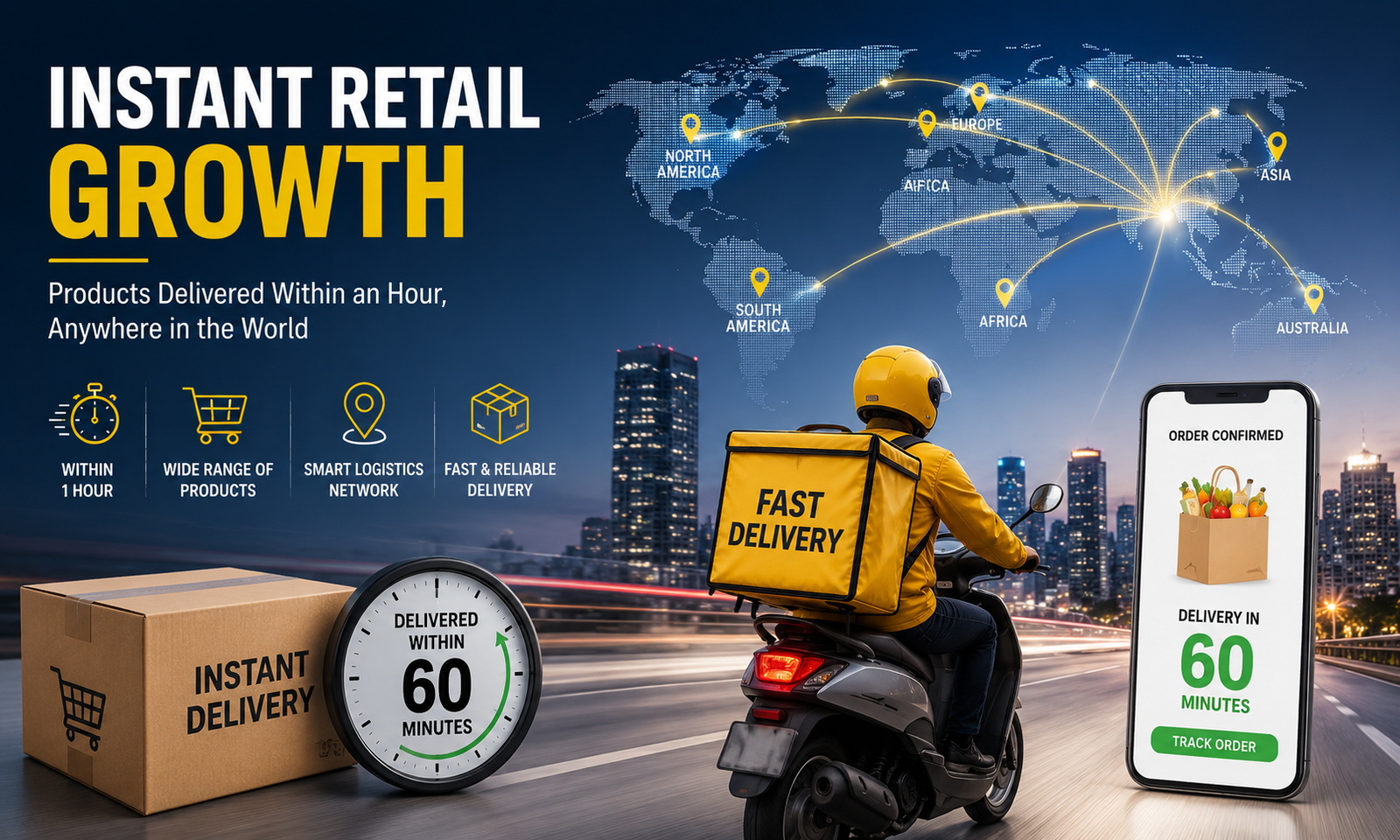
The present day ecommerce industry is in a new era termed as “instant retail” wherein the consumers can get their products in the span of 30 to 60 minutes after placing an order. This transformation is currently being driven by China, and markets around the globe – including Asia, Europe and North America – are quickly following suit. The days when groceries or food orders were the only items with fast delivery, are already in the past. Today, electronically, fashion products, cosmetics, medicines and household products are being sent almost immediately.
AI is a huge bet for major ecommerce giants in its logistics, smart warehouse, local fulfillment, and ultra-fast delivery systems. Today the expectations of consumers are rapidly evolving and in the future, brands must be ready to cope with the new digital economy if they are to remain competitive.
In the global retail landscape, China is driving the “instant retail revolution.”
China is now the biggest laboratory for the instant retailing system. AI systems are being applied to logistics to enable companies such as Alibaba Group, JD.com and Meituan to send products within an hour in the main Chinese cities.
Today, Chinese people have the expectation of instantaneously replenishing their everyday necessities. To satisfy the need, ecommerce has established thousands of neighborhood warehouses and micro-fulfillment centers that are near residential neighborhoods. AI systems can analyse and predict customer behaviour, and place products in advance before customers even put in an order.
This approach will significantly cut down delivery time, and cut costs in operating. Instant retail has also boosted impulse buying as shoppers know what items can be delivered virtually as soon as they’ve made their purchase.
Smart Warehouses are driving faster deliveries.
Today, the instant retail systems are highly dependent on automation and Artificial Intelligence. AI-powered warehouse automation, robots and predictive analytics rapidly prepare orders in smart warehouses.
Automated sorting systems are able to handle thousands of products an hour, with very little human intervention. Optimized routes provided by AI software help delivery staff to avoid traffic and minimize delays, ensuring timely deliveries.Timely deliveries are achieved by optimizing routes with AI software to avoid traffic and minimize delays for delivery riders.
Several companies are also testing self-driving delivery robots and the delivery robots using drones. The technologies could be even more effective in the coming years and make ultra-fast ecommerce even faster.
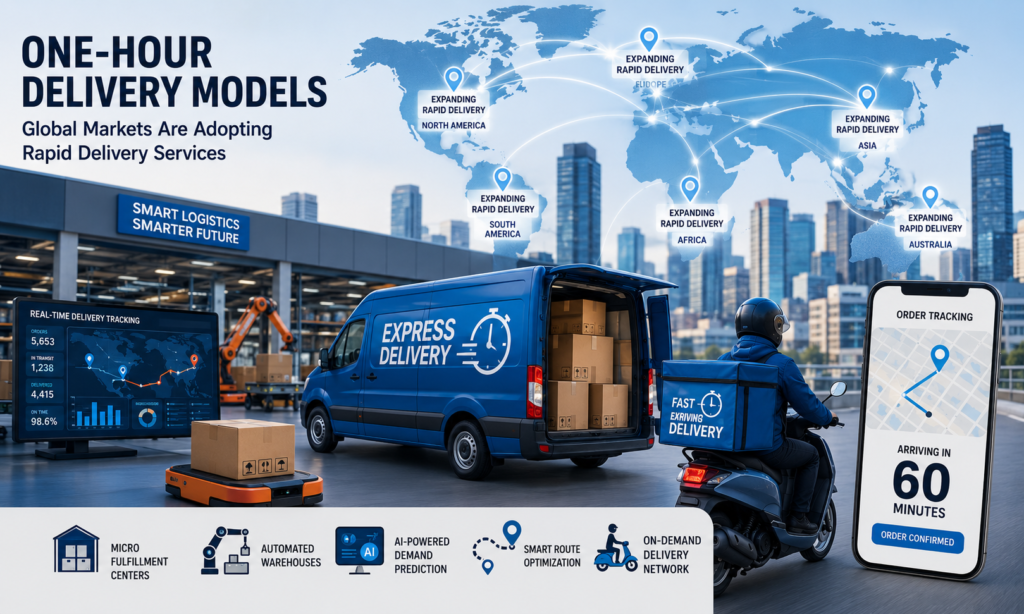
One Hour Delivery Model is being adopted in the Global Markets.
China’s success of instant retail is impacting the global market.China’s success in instant retail is having an impact globally. The retail giants in the United States, Europe, Middle East and India are making huge investments in the infrastructure required to handle fast commerce.
Amazon, Walmart, and Instacart are among the companies that are testing out delivery services that are as soon as the same day, or one hour, and are available in several cities.
With the rise in the number of cities in India, quick commerce platforms are gaining popularity as people living in the urban areas have started to favour shopping based on convenience. In big cities, people have seen the delivery of the groceries, medicines, electronics and even personal care products in 15 minutes or less.
Earlier this week, we touched on the decreasing patience of consumers as they became more inclined to not wait several days for delivery when faster options are available.Earlier this week, we spoke about how consumers weren’t as inclined to wait days for delivery when it was possible to get it faster. This change is transforming the local vendors’ and foreign ecommerce brands’ competition.
The behavior of consumers is rapidly changing.
Retail is rapidly evolving, and Instant Retail is the key to change. When you buy something so quickly, it’s a much more emotional attachment between purchase and satisfaction.
Customers are now buying products more often, but in smaller quantities, due to the knowledge of quick product delivery. This is driving overall ecommerce order volumes and pushing retailers to continue being mindful of having ‘live inventory’ visibility.
In particular, younger shoppers appreciate the attention to speed and convenience as compared to traditional shopping. Product trends, viral products and social media are also helped by this instant retail as brands can tap into these trends as soon as they occur.
Issues for the Instant Retail Sector
While instant retail represents huge opportunities, it also presents a number of challenges to the operation and finances of retailers.
Running such fast delivery services is an expensive proposition as it demands investment in local warehouses, delivery personnel, the technology and the use of artificial intelligence in logistics. Excessive expenses may eat into profits and in very competitive markets, may be a factor that distinguishes the winner from the loser.
Besides traffic jams, lack of workers and environmental issues are other challenges to speedy delivery networks. In addition, some governments in certain areas are enacting laws about the conditions for delivery workers and on urban logistics.
A new important issue is emerging, sustainability. Companies that don’t find eco-friendly solutions to the delivery process like electric delivery vehicles and reusable packaging materials can lead to a rise in packaging waste and transportation emissions.
In the future, ecommerce will be about speed.
Retail experts feel instant retail will further develop during the next decade. While the global market once more relies on the human workforce for deliveries, AI, robotics, predictive analytics, and smart logistics will make these one-hour deliveries more affordable and readily available.
Retailers will be expected to make their stores into mini-distribution centres, and to connect the two worlds, physical and digital. The mixed strategy may be useful for businesses to cut down on delivery time and optimize inventory management.
Consumer expectations are always evolving and speed can be one of the crucial key competitive benefits in ecommerce. Companies that are able to effectively integrate quick delivery, excellent customer service and efficient logistics will reign the retail economy in the years to come.
Common Questions (FAQs)
Instant retail is a type of retail that is a new concept.
Instant retail is an ecommerce approach that provides an instant delivery of products to the customers within a few minutes or hours after their order is placed online.
The question is: why are there no other countries developing instant retail like China?
China has developed logistics networks, high penetration rates of ecommerce, AI systems of delivery services, and high demand for rapid services from the consumers.
What are the common products that are delivered ‘instant retail’?
Typically, fast delivery is available for grocery, medicine, electronics, beauty, fashion and household items.
AI benefits instant retail companies in several ways:AI can assist instant retail firms in a few ways:
By leveraging AI, businesses can anticipate customer demand, control inventory in their warehouses, design delivery routes, and maximize efficiency.
The first question to be answered is what are the biggest challenges in instant retail?
There are a lot of issues to be addressed, such as high operation expenses, delivery logistics, sustainability issues, labor management and traffic issues in the cities.