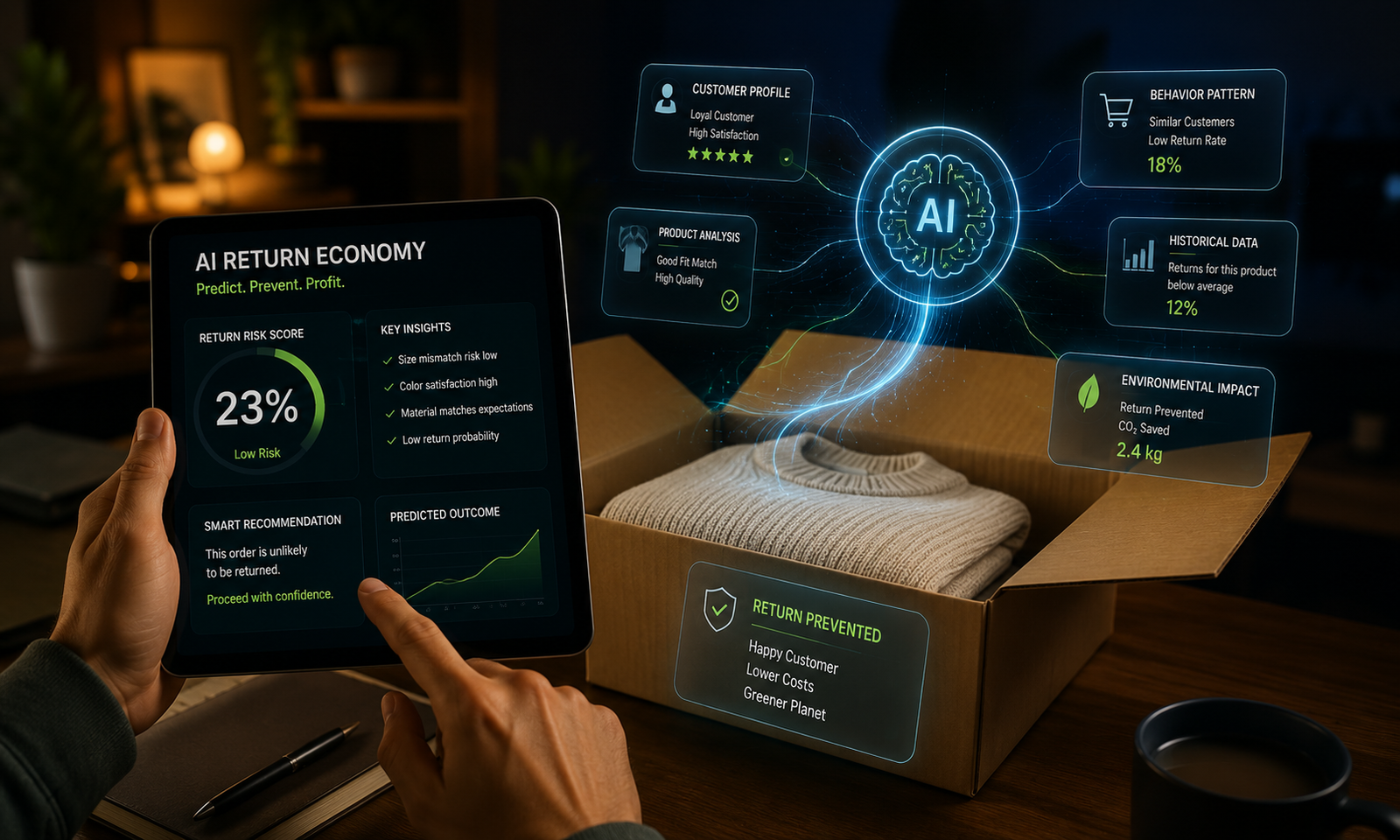
One of the largest, non-obvious expenses in eCommerce are product returns. Online shopping continues to rise across the world, but for many categories, it’s a lot higher than going in person to buy the item. Fashion, electronics, furniture and beauty products are some of the industries that have returns issues because the customer ends up getting something that they did not expect.
This is all changing with the advent of Artificial Intelligence. Rather than assist retailers with quicker returns processing times, modern AI systems are now improving the way they anticipate and prevent customers from returning items before they’re even ordered. AI-driven predictive analytics, personalized recommendations, virtual product experiences, analysing customer behaviour, and intelligent logistics are just a few of the ways AI is transforming the way businesses are managing returns – and even preventing them – ushering in what many people are describing as the AI Return Economy.
AI understands the buyer’s intent before customers click “buy”.
AI isn’t just limited to data from purchases. AI now captures hundreds of behavioural metrics to gauge if a customer is likely to return and/or stay a customer.
AI will not just suggest products based on the popularity, but it will offer suggestions for products most likely to suit a particular individual’s tastes, expectations and past shopping behavior.
- Research on the shopping habits of consumers prior to buying.Research on consumer’s pre-purchase shopping behavior.
- Determines what they have bought in the past that worked well for them
- Recognizes when they are unsure when buying things.
- Automatically checks compatibility of products
- Estimates the likelihood of return in the real time
This proactive approach will help retailers predict what customers will be likely to retain after the delivery and thus be able to make a good recommendation to them.
The traditional product recommendations are replaced by Behavioral Prediction Models.
Today, the kinds of things that recommendation engines are now taking into account are much larger than just “Customers Also Bought.”
Modern AI can measure how long users spend on a website, how much they zoom in, whether they add items to their wishlist, if they add items to their shopping cart but don’t complete the purchase, the percentage of site review read, and past return trends to determine purchase confidence.
If the AI is uncertain, it can suggest other sizes, colors, brands or other similar products that might have less risks of returns. This smart assistance aids shoppers to make prudent choices prior to checkout.
Personal Shopping Assistants minimize decision mistakes.
Shopping assistants are transformed into digital consultants.Shopping assistants are now AI-powered, transforming into digital consultants.
Rather than just referring to the features of a product, they offer personalised recommendations, comparing features, recommending alternative products, explaining features and differences and pointing out potential compatibility concerns.
These assistants help to decrease impulse buys that can cause returns.
Customer Profiles continue to enhance Recommendation accuracy.
Machine learning systems create new customer profiles as time goes on.
All buying, searching, reviewing and returning helps to enhance future recommendations. Unlike static preferences, AI continually adjusts to fit the preferences of customers, ensuring that future purchases are more and more likely to be accurate.
Intelligent Product Experiences Create Product Confidence.
A big issue for customers to return products is that they don’t have a physical interaction when they are shopping online. This is where AI comes in and is helping to address it with digital experiences, which can mimic the in-store shopping experience.
While traditionally customers would have to rely on static product images before making a purchase, customers can now assess a product in a very personalized manner.
- A virtual try-on technology with Artificial Intelligence.
- To create a 3D visualization of the room with Augmented Reality.
- Highly efficient size prediction engines.Smart size prediction engines.
- Personalized product simulations
- Visually engaging shopping experiences with the capability to interact with them.
These innovations lessen the uncertainty and confidence on the part of the buyer and consequently reduce returns.
With Virtual Try-On, there’s no need for guesswork when picking the right size.
Fashion continues to be one of the highest grossing categories globally.
Virtual Try-on systems with AI use multiple data points such as body size, previously bought items, brand-specific sizing, customer feedback, and more, to suggest the right size.
Customers can visualize clothes on real life digital models before purchasing, thus minimising returns for being the wrong size.
AI Room Planning Makes Furniture Shopping Easier.
The cost of large furniture returns to retailers are also high, as is the cost to the consumers.
AI visualisation of rooms enables consumers to place furniture virtually into their homes with the help of their smartphone camera. Customers are able to check out the dimensions, colors, lighting and spacing prior to buying.
This minimizes costly mistakes caused by inaccurate size estimation.
Product Images Turn into Interactive Decision Making Tools.
Artificial Intelligence improves product visualization: Artificial Intelligence creates images of products that go beyond the traditional photography.
Products can be turned around and viewed, inspected in detail, compared in color, lighted to test those different colors, and interactive demonstrations can be viewed which are very similar to real life situations.
The more customers know about a product before they purchase it, the fewer the number of customers who will return the product.
AI Identifies High Risk Orders Prior to Shipping.
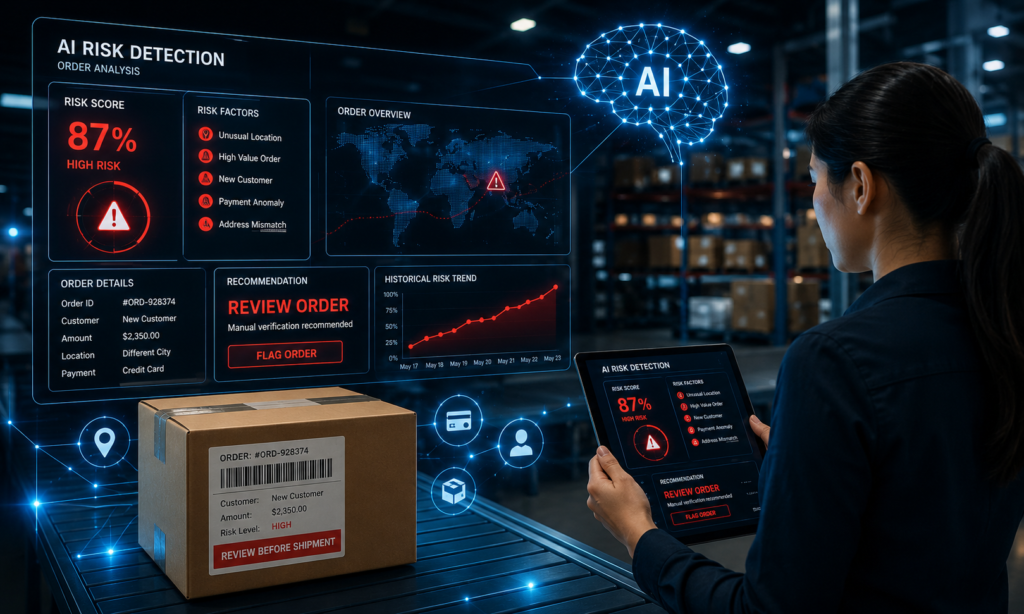
Not all orders are created equal and not all orders should be fulfilled immediately.
The AI-powered technology provides a return-risk score for each purchase guided by customer buying behavior, product attributes, seasonal trends, pricing trends, and more.
Retailers can take preventive measures before the shipment, such as checking out the size selection, giving suggestions for other products being sold, or asking for confirmation on size selections for unusual purchases.
Smart Inventory Decisions minimize Quality Related Returns.
AI technology is also used to track the quality of manufacturing and the performance of the warehouse.
Machine learning detects products that are unusually defective, packaging with damaged packaging, supplier inconsistencies, and more before products arrive at the customer, preventing these issues from reaching their end-users.
Retailers’ quality control is enhanced upstream to decrease returns due to product problems, not customer dissatisfaction.
Logistics Intelligence is used to avoid delivery issues.
Frequently, with shipping delays and damaged deliveries, returns are caused that aren’t necessary.
AI continuously analyzes the delivery routes, weather, the workload in the warehouse and the performance of the carrier and optimizes shipping decisions.
Better logistics means better customer satisfaction and reduced returns due to late and damaged order deliveries.
Conclusion
The AI Return Economy is a significant change in an online retailer’s approach. Companies are leveraging Artificial Intelligence to forecast potential returns and minimize them from happening.Businesses are no longer considering returns as an inevitable cost, but instead, they are taking measures to anticipate them and prevent them from occurring.
Whether it’s predicting what they’ll want to buy next or providing virtual shopping experiences, AI is assisting shoppers in making well-informed buying choices and boosting retailer profits.Predictive recommendations, virtual shopping experiences, intelligent logistics, and personalized customer guidance are just a few ways AI is helping shoppers make informed purchasing decisions while increasing retailer profitability.
Frequently Asked Questions
1. What do you mean by AI Return Economy?
AI Return Economy is the application of Artificial Intelligence to minimize the product returns by making the shopping experience more accurate, personalized and making it easier for the customer to make decisions before purchasing.
2. How does AI reduce online shopping returns?
AI can help in analysing customer behaviour, forecasting buying confidence, suggesting more suitable products, offering virtual clothes and enhancing logistics, avoiding mistakes related to returns.
3. What are the key industries that can reap the most benefits from AI return prevention?
The most successful industries are fashion, furniture, electronics, beauty, footwear and home improvement, as the industries have had a higher return rate historically.
4. Is there an accuracy level that an AI product recommender can provide for product size recommendation?
Yes. The modern AI size recommendation systems have brought high accuracy in size recommendations by leveraging on the previous purchases, customer measurements, brand-specific sizing and machine learning models.
5. Is AI going to go to the extent of making product return completely redundant?
No. The rate of returns will always be a percentage because sometimes customers will want to return goods for various reasons, such as changing their mind, due to some unforeseen event, etc. But, AI can significantly cut down on the number of avoidable returns, by better accuracy in the purchase process before checkout.