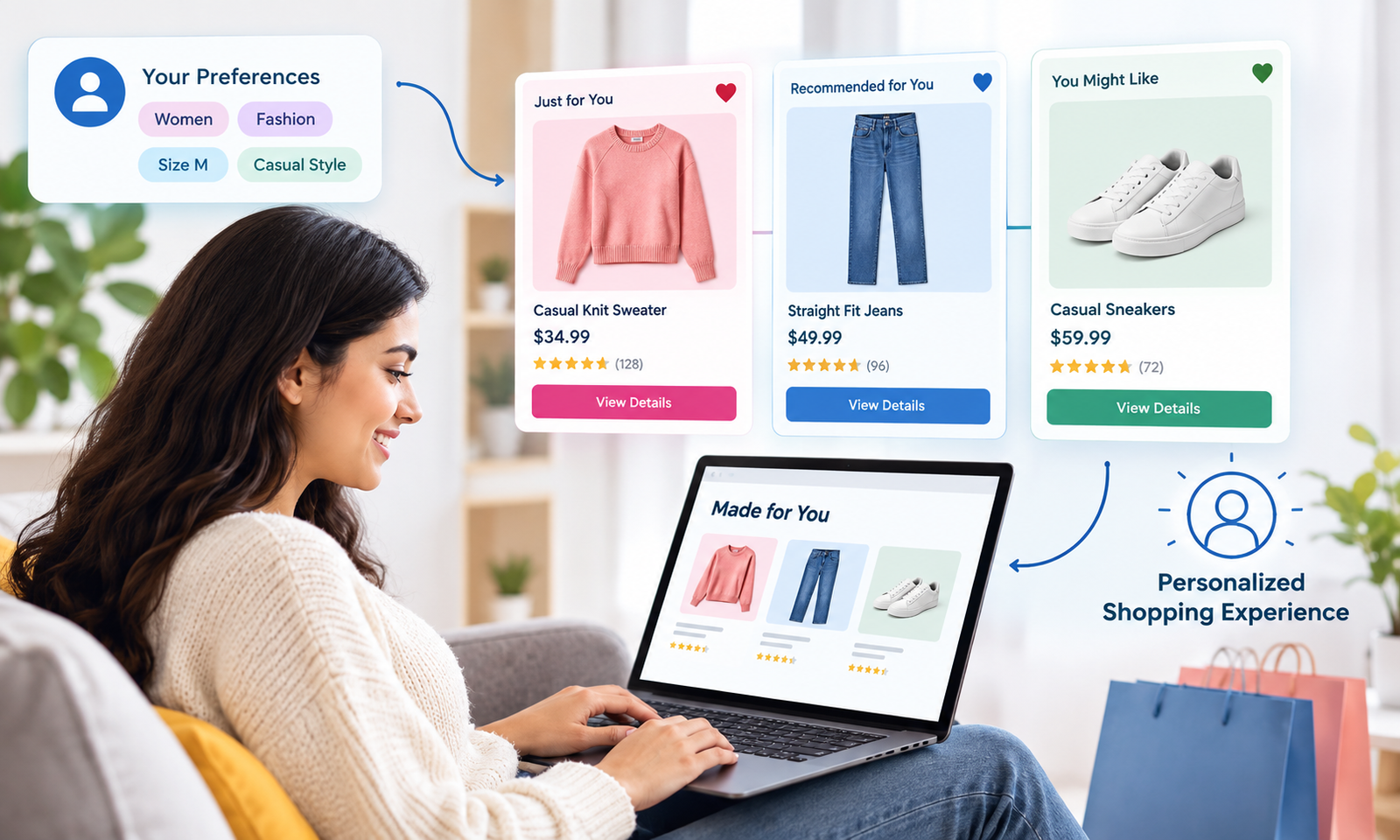
Brands are no longer putting the same product in front of all customers—it’s a new era in e-commerce. The same product can now be described, positioned, recommended, and promoted differently based on the audience that it’s addressing. E-commerce businesses are leveraging data, AI, behavioral signals, and context to tailor product pages for each individual customer, rather than a general one.
It’s more than just advertising that changes. It impacts product discovery, merchandising, pricing communication, suggestions, search results, and even the terms customers are seeing before they make a purchase. While the product itself might stay exactly the same, the manner in which it is marketed can turn into very individual.
One Product Can Now Tell Different Stories.
Traditional e-commerce merchandising relied on a “one size fits all” product description, the same pictures, and a set of marketing messages. In most cases, the same information was provided to all shoppers that visited the same page.
That’s all about to change with personalized commerce. One customer might be marketed towards the durability of a product, and another might be marketed towards ease of use and time-saving. The different customers are thinking about the same product but making the presentation different around their perceived priorities.
Personalization Is Taking a Step Past Product Recommendation
While there have been recommendations of products for years, today’s personalization can impact so much more than a “You May Also Like” section. An e-commerce system may have the ability to modify headlines, reinforcing text, category positioning, promotions, and product comparisons based on the context of the customer.
Examples of behavioral signals are past purchases, browsing history, search behavior, device interactions, shopping frequency, and previous campaigns. As these signals are intelligently combined, brands can construct a variety of selling stories on the same product line.
The meaning of value can be changed by context.
Just because the price is high doesn’t mean shoppers are not willing to pay it. Value can be perceived as convenience, quality, speed, reliability, sustainability, design, or usefulness for the long term.
A personalized eCommerce experience can present the most relevant value proposition rather than having to intellectualize and understand the same generic value proposition. This is a key difference: personalization doesn’t mean to change the product; it means to change the focus on different attributes of the product.
AI Powering Dynamic Merchandising Made Practical.
The eCommerce platform can process a vast amount of information on customers and products much quicker than the traditional merchandising team with the assistance of artificial intelligence. AI systems can detect trends on searches, clicks, purchases, and product interactions and find customer segments.
This opens the door for businesses to test out the various narratives for their products on a large scale. Brands have the ability to increasingly use automated systems to decide on the most relevant messages for specific shoppers, rather than creating a separate campaign for each audience.
Rewriting the rules of individual selling
With the adoption of e-commerce, it’s important for businesses to carefully consider the implementation of personalization. To enhance relevance while not overwhelming or unfittingly personalizing customers can mean a highly customized experience, but too much can cause the customer to feel uncomfortable or can lead to inconsistent brand experiences.
Five factors are becoming paramount:
- Customer signals ought to enhance relevance, yet not bring about awkward personalization experiences.
- Product claims will have to be true in all customized shopping experiences.
- But consistency in brand identity must not be lost even if messages to customers are changing.
- Personalization systems must be tested over time to avoid wrong assumptions regarding shoppers.
- The message that customers receive prior to a major purchase decision should be meaningful.
Becoming more flexible with the product page.
The original product page is the traditional storefront that is like a digital place. The same, almost identical information is delivered to all, without taking into account the needs of individuals.
Experiences that go beyond and are oriented towards the future are possible in the e-commerce context. Product pages can be flexible spaces—where some of the content can vary based on the customer’s intention. Those looking for a comparison search may be presented with the competitive specifications first and, if they are a current customer, with complementary uses or information about the product’s replacement.
Five Signals Shaping Personalized Product Selling
There are numerous hints and tips that e-commerce brands can rely on to decide just how to showcase their products. Generally the best indicators are ones that have to do with what someone has done, not who someone is.
- Use recent searches to discover real-time shopping motivations and buying intent.
- Previous purchases show inclinations towards similar categories of products and brands.
- The distribution of the number of products browsed reflects the interest in a product over a shopping trip.
- There are cases where a device context will affect the information that is being displayed.
- Purchase frequency is used to determine if a customer has returned and/or if there is a need to replenish a customer’s order.
The greatest opportunity is relevance.
There is one simple reason why there is a strong argument for e-commerce being individualized: shoppers don’t all have the same priorities. One product can be used to address multiple issues, depending on the customers.
If brands are aware of those distinctions, they can be able to speak more effectively without having to broaden their lines. Communicating better about your current offering can make the customer realize that the product is an appropriate solution to their problem.
Where Personalized Selling Is Headed Next.
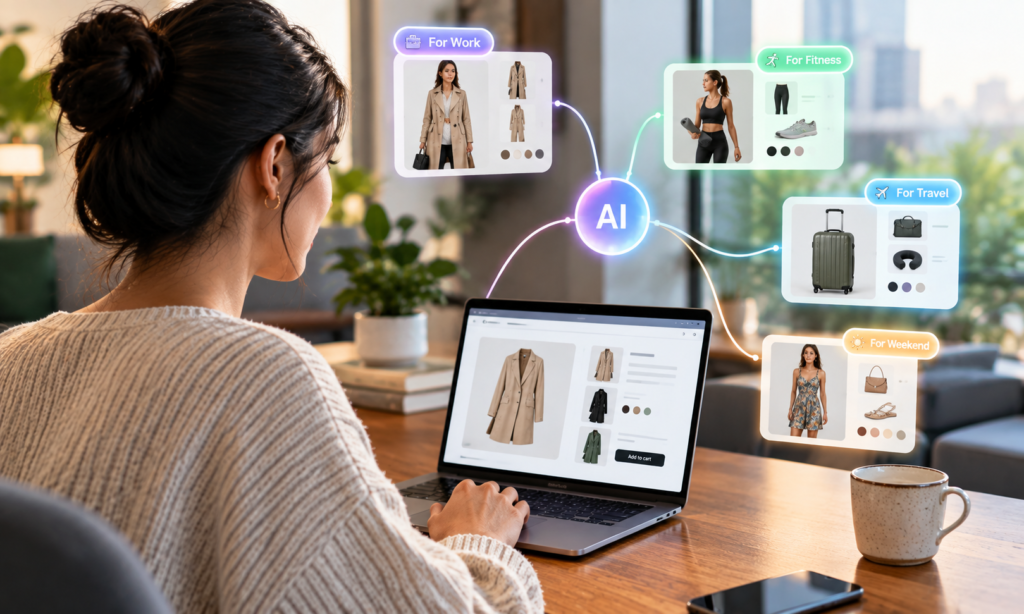
The future of e-commerce might mean that there won’t be any hard-and-fast product pages—the next form of e-commerce will be a continuous product presentation. AI systems might increasingly be able to tie together all the components of search, merch, recommendations, ads, and in-site content around the same customer context.
It also implies that e-commerce brands can battle not just on products and prices, but additionally on the way in which they clarify their products to one particular consumer.
Conclusion
Ecommerce is becoming increasingly “story-centric” with the ability to sell the same product through various stories to various consumers. This is becoming more and more attainable via AI, behavioral signals, search intent, and dynamic merchandising.
It’s a great opportunity for brands. Can adapt and freshen up existing products, rather than changing the inventory. However, personalization needs to be done with data that is correct, responsibly implemented, consistently branded, and transparent.
FAQs
1. What does it mean that e-commerce brands are selling in different ways to consumers?
Ecommerce brands are leveraging the context and purpose of search queries, as well as customer behavior, to serve up products in a way that caters to the needs and preferences of individual shoppers.
2: Does a personalized approach to selling alter the actual product?
No. In the majority of cases, there is little change in the actual product but changes in the message, product positioning, recommendations, and/or supporting information.
3: How does AI help personalize e-commerce experiences?
AI can be used to process customer and product signals and identify patterns to help determine the product information and/or recommendations that might be relevant.
4: Does custom eCommerce decrease customer trust?
Yes. When the personalization is too much, too little, or too unclear, the customers are uncomfortable; therefore, there should be transparency and responsible personalization practices from brands.