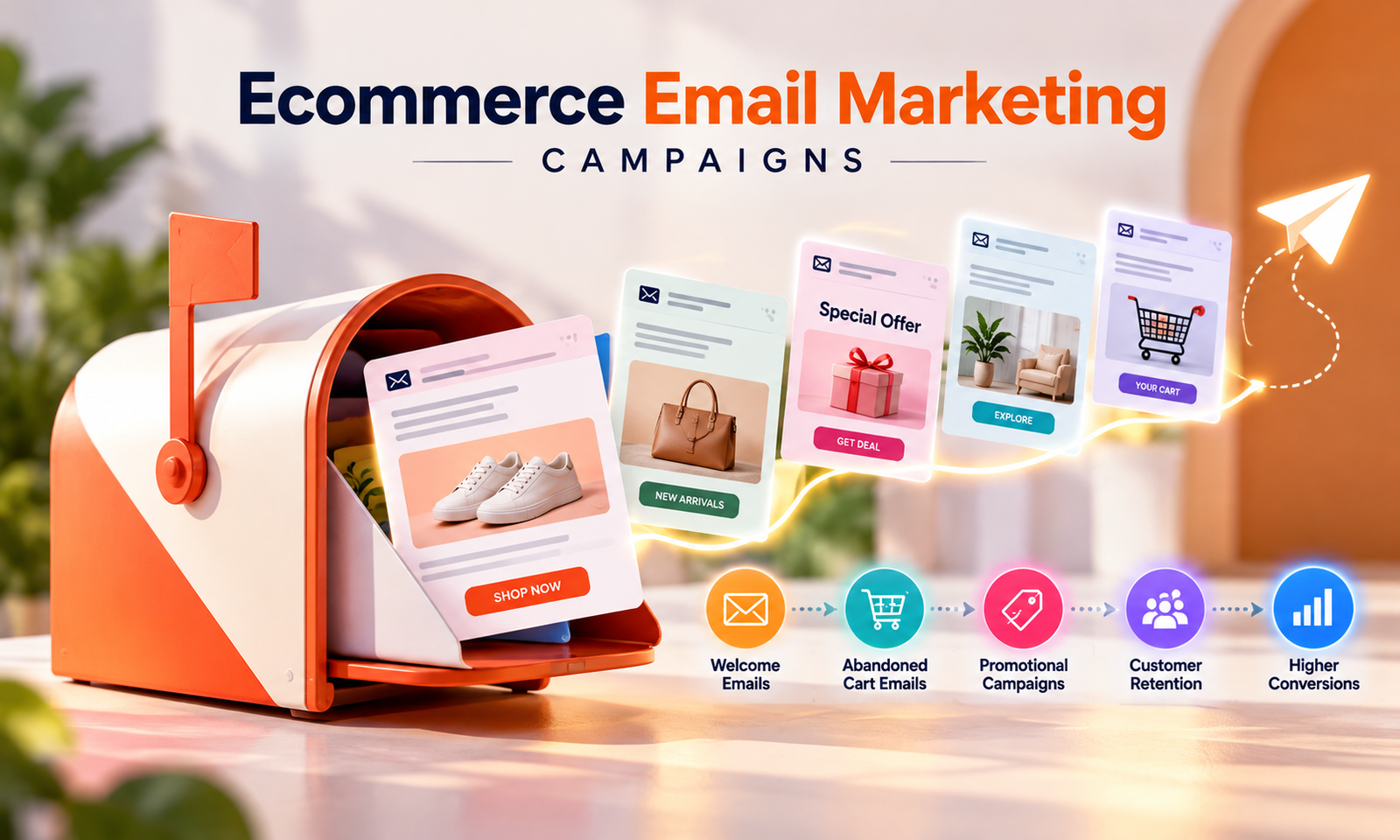
Ecommerce email marketing can be used to help build customer relationships, recapture lost sales and prompt repeat orders by communicating with the appropriate customer. Different retailers don’t send the same messages to all of their customers, but rather messages that are tailored to customer behavior, purchase history, and preferences, and which are sent at the right time.
Ecommerce Email marketing is possible through a structured system, one that links acquisition, engagement and retention into a single measurable system. Automated workflows can be integrated into a customer’s consented and preferred communications, and can be paired with planned campaigns by businesses. The following guide shares information on how to set up campaigns, build useful automation, ensure a high open rate and good deliverability, and measure results without the pressure of endless promotions.
Developing a Customer Intent-Based Campaign Framework.
The first step in crafting a successful email marketing strategy for ecommerce businesses is to comprehend their subscribers—why they’ve joined a mailing list and what information they anticipate. It might be necessary to educate a new customer on the product, or remind an existing customer to replenish or give them suggestions for other products they might like.
Before picking templates or tools to automate your messaging, you need to establish your audiences, communication objectives, and significant triggers in an ecommerce email marketing strategy. This bottom line helps to avoid duplicated messages, ensure campaigns are on target with customer needs and keep these campaigns focused.
Segment Audiences with Relevant Signals
Segmentation helps to determine useful attributes of customers like purchase frequency, product interests, engagement history, etc. which helps the ecommerce business to segment their emails. These signals enable marketers to personalize their content, without making any assumptions about the individual customer.
When it comes to ecommerce email marketing, it’s always best to have a couple of good segments rather than build an overly complex list that can be hard to keep up. Review and remove customers from segments on a frequent basis and don’t promote customers that don’t now fit the segment.
Five Campaigns Every Online Store Should Consider
- Welcome campaigns educate the brand, its value, and the relevant products for the new subscribers.
- Product education campaigns address frequently asked questions and guide consumers to find the right product.
- Promotional campaigns create clear offers and specific timetables and convey actual offers.
- Post-purchase campaigns offer actionable advice, assistance and pertinent following actions.
- Reactivation campaigns re-engage inactive subscribers and do so with respect to their preferences.
Create Messages That Solve Shopping Problems
Ecommerce email marketing content is effective when it’s based on helpful choices. Compare products can help clarify differences in materials, compatibility or other functionality and a post-purchase message can help customers use their purchases appropriately.
To follow ecommerce email marketing best practices, you need to craft your subject line accurately, offer a good call to action and make sure that the offers you’re presenting in your email correspond with your landing page. This will enhance the experience of the mobile users thanks to its readability and accessible formatting.
Designing Automated Workflows That Respond to Behavior
A consistent ecommerce email marketing approach is achieved by automation, where one doesn’t need to manually schedule all email messages to be delivered based on customer actions. Workflows need to be based on reliable triggers, reasonable timeouts and logical termination criteria.
With ecommerce email marketing, a successful strategy would involve distinguishing between emails that are just a notification to the customer and emails that are a customer promotion. Recommendations, discount offers, and order confirmations and shipping updates are not the same.
Connect Triggers With Relevant Follow-Ups
Remind shoppers to come back and finish a purchase because they left the cart, but if the business has a valid basis for reaching out, that can be carried out with abandoned checkout reminders.Abandoned checkout reminders can be used to get shoppers to return to the unfinished purchase, although only if the business has a legal right to contact the person. The reminders for browsing should be based on proper permissions and effective behavioral information as well.
Suppression rules are crucial to ecommerce email marketing strategies, too. Once an individual purchases, the irrelevant checkout messages should be halted and if he/she unsubscribes, he/she should not receive any more marketing.
Five Checks Before Activating an Email Workflow
Don’t just look at individual emails when testing ecommerce email marketing automation, test the entire subscriber’s journey.
- They are triggered with accuracy and the right customer action initiates each workflow.
- Consent, segmentation rules and suppression conditions are checked in the audience eligibility check.
- Message timing ensures that the messages are not sent too often and do not overlap.
- Product pages, discounts and preference controls work as intended with link validation.
- Exit conditions prevent the sending of unneeded messages following a purchase, cancellation or unsubscribes.
Ensure Delivery and Trust of Subscribers
The ability to consistently get your ecommerce emails into inbox is vital for ecommerce email marketing. Use the correct settings for SPF, DKIM, DMARC to authenticate email sends, have accurate subscriber lists and offer easy unsubscribe paths.
The established best practices of ecommerce email marketing just don’t allow for the use of contact lists, spammy email subject lines, or over-sending. Track complaints, bounces, and engagements and analyse to find issues so that you can raise your campaign volume.
Measuring Campaign Performance Beyond Open Rates
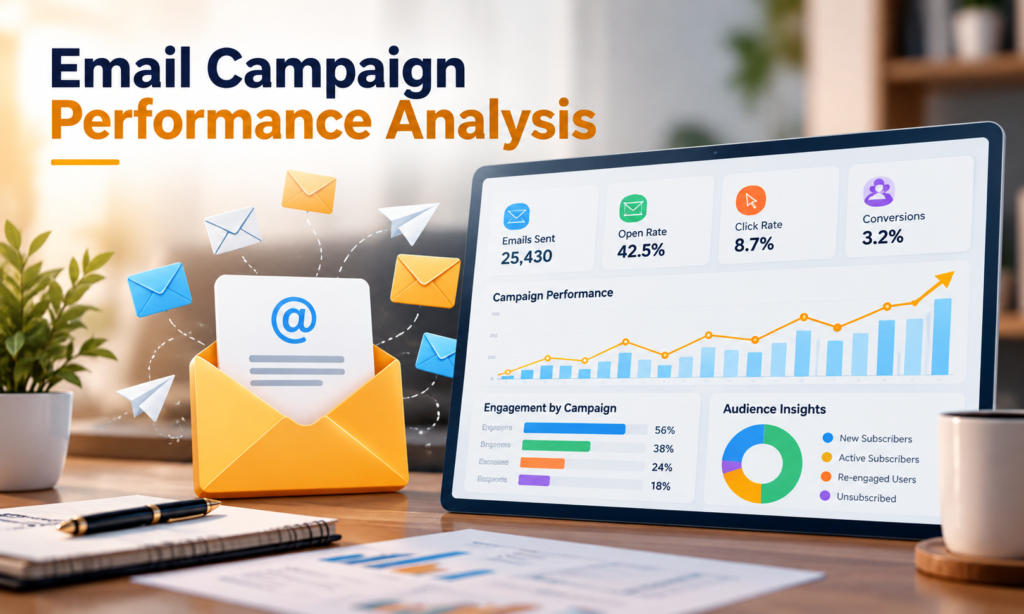
Reliable ecommerce email marketing measurement is when you link the activity of your email message with important business results. Open rates should not be used as the measure of a campaign’s effectiveness as privacy protection and automatic loading of images can lead to inaccuracies in measurement.
For ecommerce, viewings of clicks, attributed orders, revenues, unsubscribe rate and customer retention should be taken into consideration for an email marketing strategy. When comparing campaigns, be sure that the attribution settings and reporting windows are the same.
Test One Meaningful Variable at a time.
Experiments that start with hypotheses are better for enhancing ecommerce email marketing. Keep other salient points the same and compare aspects like subject lines, timing of emails or product suggestions or calls to action.
Practical ecommerce email marketing strategies are based on enough samples for information, and avoiding making a declaration of winners from small differences. Take notes, note the problems that arise, and implement positive changes in phases with similar groups.
Conclusion
Sustainable ecommerce email marketing is about delivering relevant email campaigns, ensuring reliability, highlighting responsible data practices and measurement. Rather than more messages because it’s possible, businesses need to focus on their subscribers’ needs.
By focusing on some fundamental aspects of email marketing, ecommerce retailers are able to consistently communicate with their customers and provide an exceptional experience, which in turn can help them encourage repeat sales.When retailers practice ecommerce marketing email best practices, they can keep the communication clear, improve the customer experience, and promote repeat sales. Successful ecommerce email marketing programs continuously adapt to the results of testing, segmentation and honoring customer preferences.
Frequently Asked Questions (FAQs)
1. How often should an ecommerce store send marketing emails?
The number of times the message is delivered will be based on subscriber engagement, expectations, and the relevance of the message to the subscriber. Plan a realistic schedule, track bounce and complaint rates, and make tweaks as needed for user reactions.
2. What is the best automated email sequence to kick off for a new store?
It is good to start with a Welcome Sequence which is a practical one. It helps put the brand on the radar, sets expectations and offers some helpful buying help prior to the promotion.
3. Does email automation work for small businesses?
Yes. Welcome messages, pertinent follow-up and retention messages are something small businesses can automate. Triggers in simple workflows can be quite valuable, even if they aren’t as complex as those in more sophisticated automation systems.
4. What are some tips for increasing conversion rates for email?
Enhance the relevance of the audience, the benefits of products presented, the ease of the call to action and the consistency of land page text. Review results of purchases, instead of just individual email metrics, when evaluating.