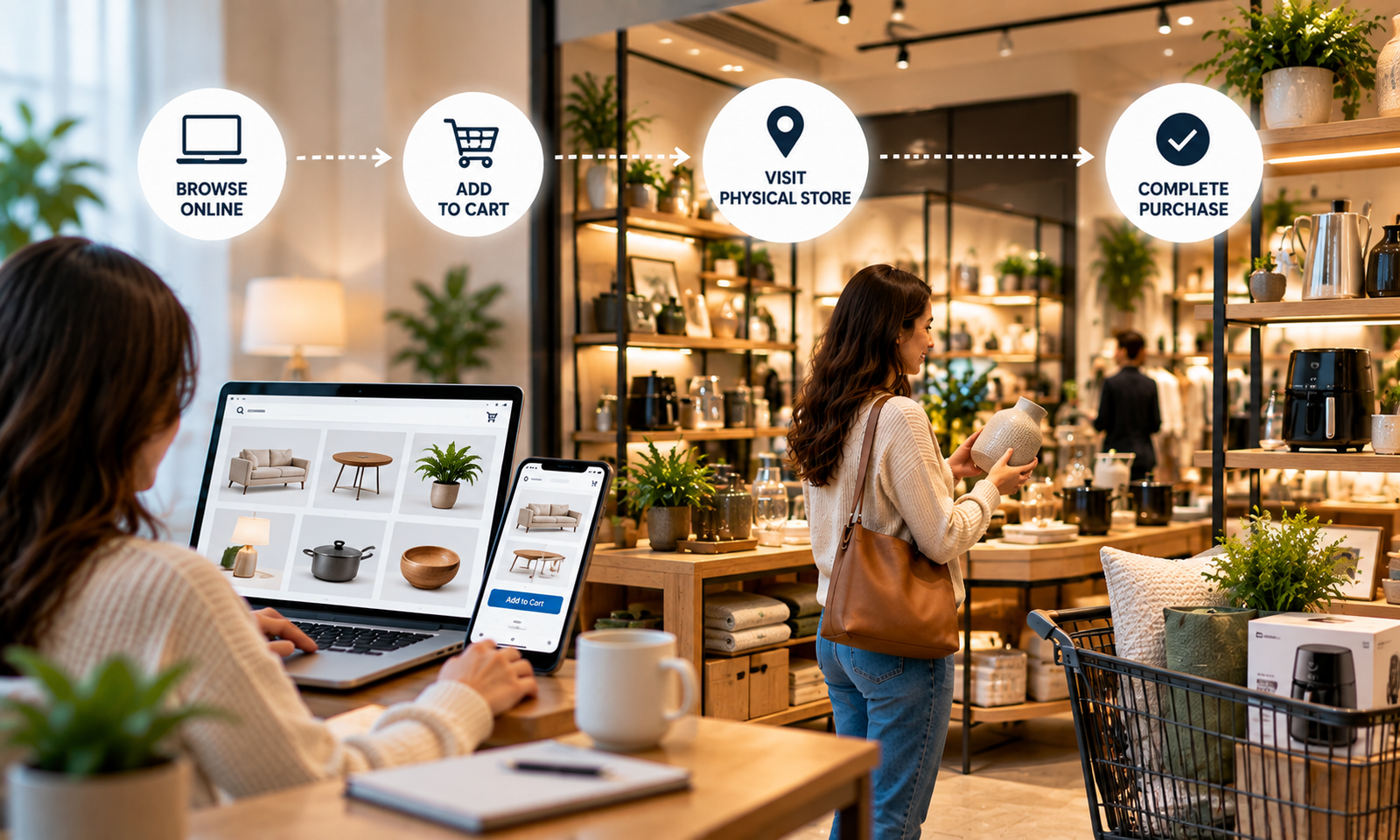
E-commerce was once thought to diminish the relevance of brick and mortar stores. Rather, the offline-Online shopping connection has been made more connected. Your customer can find a product by searching, social media, on a marketplace or a product’s website, and maybe even on a screen ultimately.
Physical locations are more likely to be conversion points in a larger journey towards e-commerce. They can shop online, check everything they want to check at the store, get orders online and pick them up in the store, return items in the store or ask for help before buying. Retailers see this as a change from the retail business that was just a sales channel to the outside. It can enable digital conversion, fulfilment, customer trust and customer service.
The Customer Journey is No Longer Linear
Today, shopping trips often are done in the digital and physical space. While browsing the web in the morning, a customer may look up a product and go to a store in the afternoon to check it out before ordering via an app when he or she arrives home.
There are a number of behaviours that are fueling this blended trip:
- Before going to stores, customers look into products via the Internet.
- Inspection through store visits enables physical checks of products.
- You can use mobile devices to scan the price and inventory when you’re shopping.
- Click and collect links for eCommerce orders with local stores.
- In-store returns make online buying easier.
Building Product Confidence Offline
There are certain products where the images, specification and reviews are not enough to evaluate the product. Clothing must be worn, furniture must be experienced in scale and, in the case of electronics, demonstrations can help.
A physical interaction can eliminate the uncertainty that a cart abandonment may result from. Although the last sale might be online, the store could have been the key influence in getting the shopper to a sale.
The future of the store is as local ecommerce infrastructure.
Retail outlets are taking on more duties that fit into mostly the distribution centre and warehouse. Stock near customers can help to speed up the fulfilment process, and provide customers with greater choice in how they receive their orders.
Now a store can get involved in ecommerce through the following avenues:
- The Buy online, pick up in store services are available.
- Local inventory availability displayed online.
- Ship from store fulfilment for orders within a certain distance.
- Convenient collection and return locations.
- Same-day or scheduled local delivery services.
Click-and-Collect Removes Delivery Friction.
Convenience of home delivery comes at the cost of potentially introducing wait time, shipping fees, missed deliveries, and uncertainty in delivery time. Click and collect is an alternative option which enables customers to book or order products online and pick them up when convenient.
The store is then the last step in completing an ecommerce sale. Collection can also be used to engage customers on the spot by offering them other products they may be interested in.
Local Inventory is coming to light before the call to action.
One other aspect of ecommerce-to-stores is real-time stock data. Today, customers can expect to find out if goods are available locally before travelling to a place.
High stock visibility can minimize over-visits and assist customers to make the right call regarding delivery, pick-up and on-the-spot buying. This demands that inventory is kept in line with all ecommerce platforms, warehouses and stores.
Digital Tools Come To The Store with Customers.
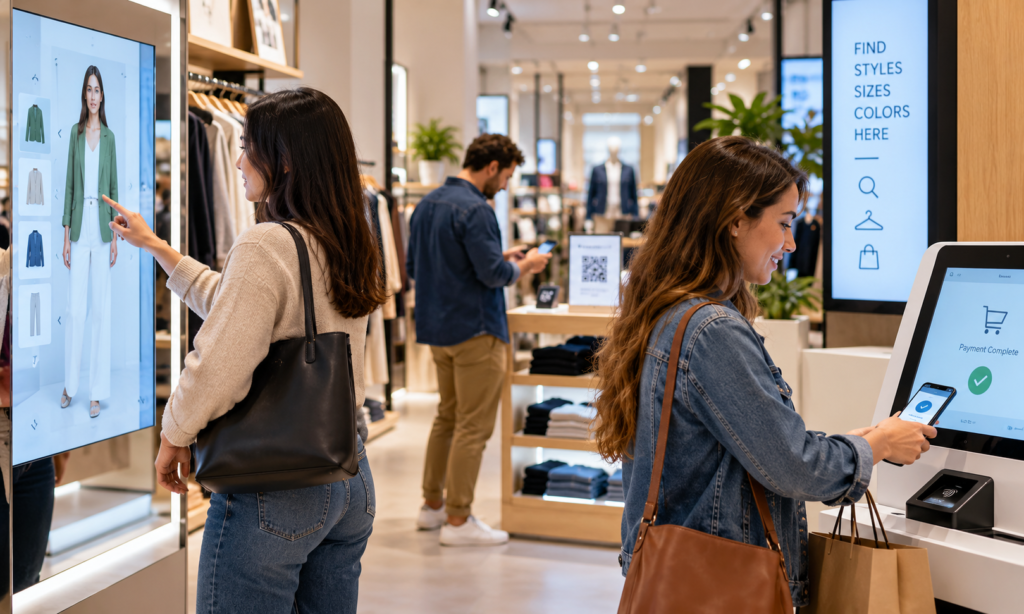
The bricks and mortar store is getting more and more digital. Any of these technologies – from smartphones to QR codes, retailer apps, digital receipts, self-service technology, and mobile payment systems – can help keep customers engaged with ecommerce systems throughout the store.
Customers can also receive more information, reviews, colour options, or any additional stock information which isn’t available on the shelf by scanning a QR code. There is a physical display, which offers a more intimate and hands-on experience with the product and a digital display, which offers more information and purchasing options.
Returns are making stores post-purchase touch points.
Returns are often considered the last step in ecommerce, but can also impact repeat customers. If products can be returned to in-store locations, packaging, shipping and waiting time can be taken out of the equation and eliminated from the process.
Inside the store, customers can swap out for an alternative, seek help and guidance or simply explore the options. The return thus becomes another customer interaction instead of it being just another reverse logistics transaction.
All measurements must proceed along the whole conversion path
Blended shopping behaviour can often be problematic when using traditional channel reporting. When attributing only the last touchpoint, you might be missing out on the visit to the store, digital advertising, product page, email or search interaction that led consumers to your site and helped them make their purchase.
There’s a growing need for retailers to have connected measurement from ecommerce analytics, customer accounts, loyalty programs, point-of-sale and inventory platforms. By improving the integration process, we can gain valuable insights into the contribution of each touchpoint in the user journey and not view online or offline activity separately.
Conclusion
Physical stores are far from a thing of the past in ecommerce, rather, they are being transformed. They can be a product discovery area, return centre, a place of fulfilment, a service point and a touchpoint for building trust in the digitally-influenced purchase.
The best retail experiences are becoming even better by enabling customers to seamlessly switch between visiting the website, mobile, picking up their purchases, collecting the items and visiting the retail store without causing inconvenience. Conversion optimization for ecommerce companies with brick-and-mortar stores isn’t confined to the checkout page. It features all the useful links between digital intent and ‘real life’ retail.
Frequently Asked Questions
1. How can physical stores help with ecommerce conversions?
Stores provide the opportunity for the customer to check products, retrieve online orders, return items, get customer service and address any questions they have that hinder their online ordering.
2. Does a store have an impact on an online transaction?
Yes. A customer can view and/or test a product in a retail outlet and then make the purchase order online via the store’s website or app.
3. What is the connection between ecommerce and click and collect?
Customers place orders and/or reserve online and collect the items in a store that is close to them, enjoying online order convenience with local fulfilment.
4. Why is real-time store inventory important for ecommerce?
It aids customers in making purchasing decisions without having to visit the retailer’s store and helps the retailer to provide services like “buy now, get it now” or “local pick up”.