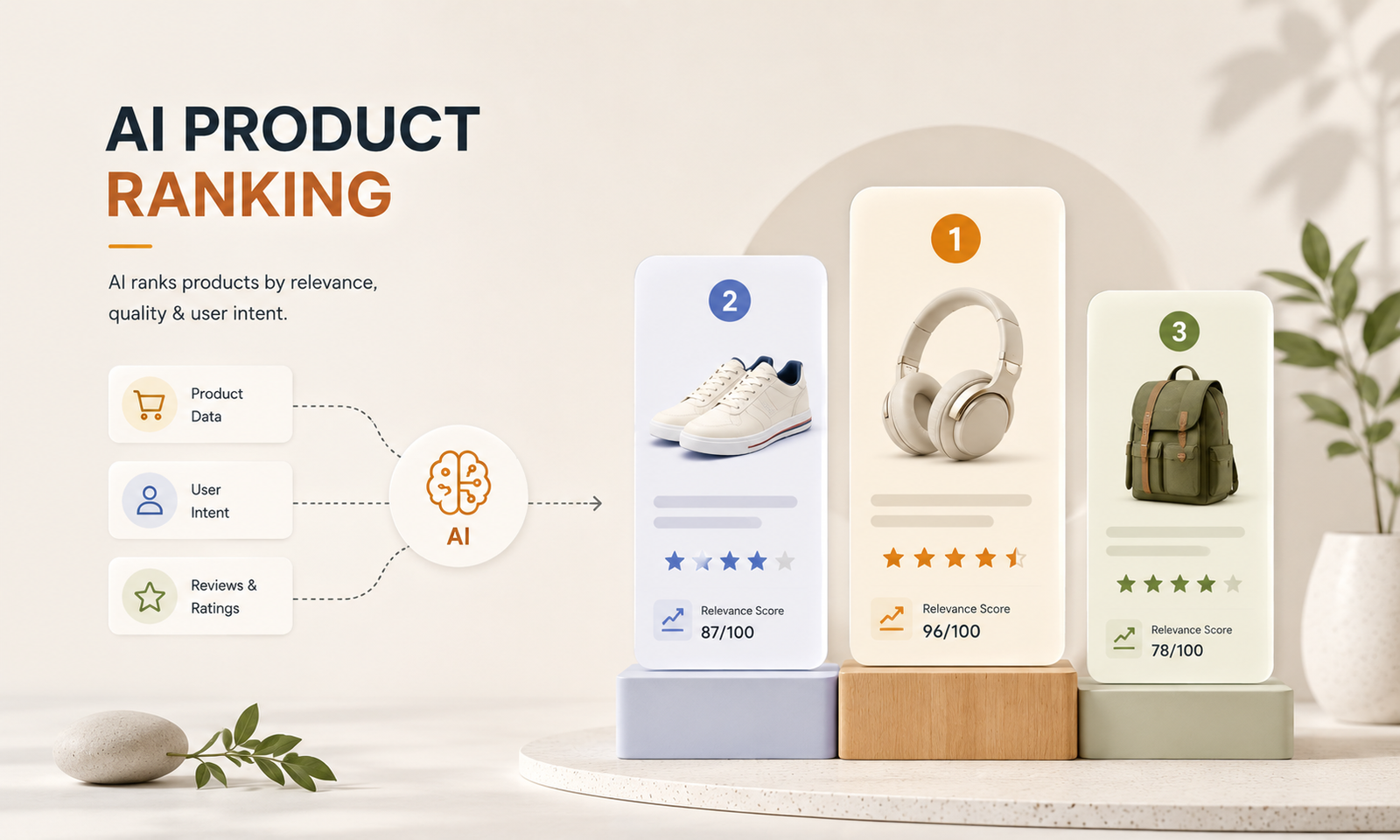
With consumers more intent on researching, comparing, understanding the specification and making purchases using AI assistants, the ecommerce discovery journey is in a new phase. Traditional SEO has been all about rankings of product pages, category pages and commercial keywords. While that’s still relevant, however, AI agents are upending the meaning of product visibility.
In contrast, with an AI-powered system, the system can read the entire shopping request, and return a set of products with explanations rather than just 10 blue links that consumers need to click to research. This is where the need for ecommerce brands to be more comprehensible, more trustworthy as a source of information comes in—especially when it comes to machines, as opposed to pages that appeal to better search engine rankings.
AI Shopping Agents are Transforming Product Discovery for Customers.
Today’s consumers can communicate their needs in a natural way as opposed to a few each character key words. A user seeking running shoes, for instance, could ask the AI assistant for suggestions on waterproof shoes that are appropriate for a long distance running trail and have a budget of a particular amount.
The AI agent will be able to understand those requirements and scour products that seem to be pertinent. It’s a significant chance for ecommerce enterprises that can give full and reliable product information.
- Accurate and complete product information is more and more becoming a basis for product recommendations.
- When it comes to conversational searches, there is a greater need to present product descriptions in a context.
- AI systems can do a comparison of multiple products prior to making purchasing suggestions.
- For ecommerce brands, there is a need to optimise visibility on search results that go beyond the search results.
Product Information Becomes A Recommendation Asset
Product pages are not just places where users are expecting to be sold a product. They need to be trustworthy sources of information, and should provide all the information required to understand a product.
Key information such as product dimensions, materials, compatibility, pricing, availability, warranty and shipping details, intended uses, limitations and customer ratings are important. This information is useful for AI systems to consider when determining the suitability of a product when it is helpful and consistent.
Search Intent is Growing into Shopping Intent.
Categorying searches is a common practice in traditional SEO, and can be done based on the following intent:Traditional SEO may classify searches by informational intent, commercial intent, navigational intent, and transactional intent. The shopping experience is changed by AI shopping as a single shopping intent can involve multiple intents.
An AI assistant can help a customer find out about products, compare features, pinpoint the drawbacks, price check and suggest the best product. Therefore, the content for ecommerce should be geared to answer more than one decision making query and not any single keyword.
Search Rankings Are Becoming Only One Part Of Product Visibility
Although ranking high does not guarantee the ultimate success of your business, it can still be of great value as it helps in driving traffic, creating backlinks, gaining exposure, getting reviews and interacting with customers. But high ranking doesn’t necessarily mean that a site will be recommended by the AI.
AI systems can collate data from various sources and provide a comparison of products to the customer’s specific needs. A lower ranking product that has good evidence, good reviews, clear specifications and/or relevance to the context may still be a recommendation.
- Even if a site has high ranking, it’s still not enough to ensure that the AI recommendation is visible.
- Reliable information from all digital sources is becoming more important to product authority.
- Reviews give valuable clues of a product’s actual performance.
- With the right pricing, AI products can be more helpful in making comparisons.
Reviews Give Real World context for product evaluation
Customer reviews can provide information about customer experiences with products, beyond what is presented in marketing materials. They could share their durability, comfort, usability, reliability, problems they have encountered, and unexpected benefits.
For ecommerce brands, it’s important to have authentic reviews and not just focus on the number of reviews. Detailed customer feedback can be used to gain context evidence to aid product understanding.
Structured Data Helps Machines Understand Ecommerce Products.
Structured data provides search engines and other systems with standardized product data. Properly marked up data makes it easier to interpret details like product price, availability, brand, etc., ratings, identifiers, and product characteristics.
Though structured data doesn’t ensure that an AI agent will make a product recommendation. With proper implementation, however, the ambiguity can be decreased, and a strong technical groundwork laid for product discovery.
Product Comparisons Can Strengthen Decision-Focused Content
Comparison content is useful for consumers to consider before buying, by showing them the differences. Ecommerce websites can describe the variations in performance, pricing, materials compatibility, features and best uses.
These comparisons can also be helpful to generate context information for products. Brands don’t need to constantly state their keywords, they can show precisely where a brand would belong in the customer’s decision-making process.
Ecommerce Teams Need An AI-Ready Product Information Strategy

To be ready for AI-powered shopping, it’s not enough to merely incorporate a few keywords into current product descriptions. It is important for businesses to look at and evaluate the quality, consistency, freshness and availability of their product information on key channels.
All product feeds, marketplaces, websites, review sites, merchant systems and others that have a legitimate voice should provide the same facts. Conflicting information may lead to uncertainty for the shoppers and intelligent systems.
Create Product Pages Based on Questions Customers Truly Have.
It’s important to have a good product page which can predict what customers are likely to ask themselves before buying it. Describe who would be interested in purchasing it and who wouldn’t, how it will be different from other products, the problem(s) it solves, and some situations in which it may not be as beneficial.
Make sure that prices and specifications are kept up to date consistently.
If the information you’re providing customers is out of date, it can hurt customer trust and lead to suboptimal shopping recommendations. The prices, stock, specification, warranties and delivery should be reviewed regularly, along with the product variants.
Conclusion
Ecommerce SEO is transitioning from ranking web pages to becoming easily understood and recommended products in AI driven shopping experiences. Product information, structured data, product reviews, relevance, consistency and trust are key elements of digital visibility that are growing in importance, alongside search rankings.
FAQs
1. Is traditional ecommerce SEO still important?
Yes. Organic traffic, visibility, authority and product discovery is still being propelled by traditional SEO. The use of AI for optimization should be a complement to, not a replacement for, the current SEO practices, including technical optimization, content quality, internal linking, and search-optimization.
2. What information do AI shopping agents need?
Product descriptions, specifications, price, availability, reviews, ratings, brand, compatibility, and other context information can be utilized by the AI systems to assess products.
3. Is there any structured data that ensures AI recommendations?
No: Structured data will help machines understand product information, but does not mean it will help make product recommendations. When determining which products fit the customer’s needs, AI systems are able to take into account many signals.
4. Do ecommerce reviews have an impact on product visibility?
Honest feedback can be beneficial information regarding the quality, reliability, performance and customer experience of products. Their influence is dependent on the AI system(s) and information sources used.