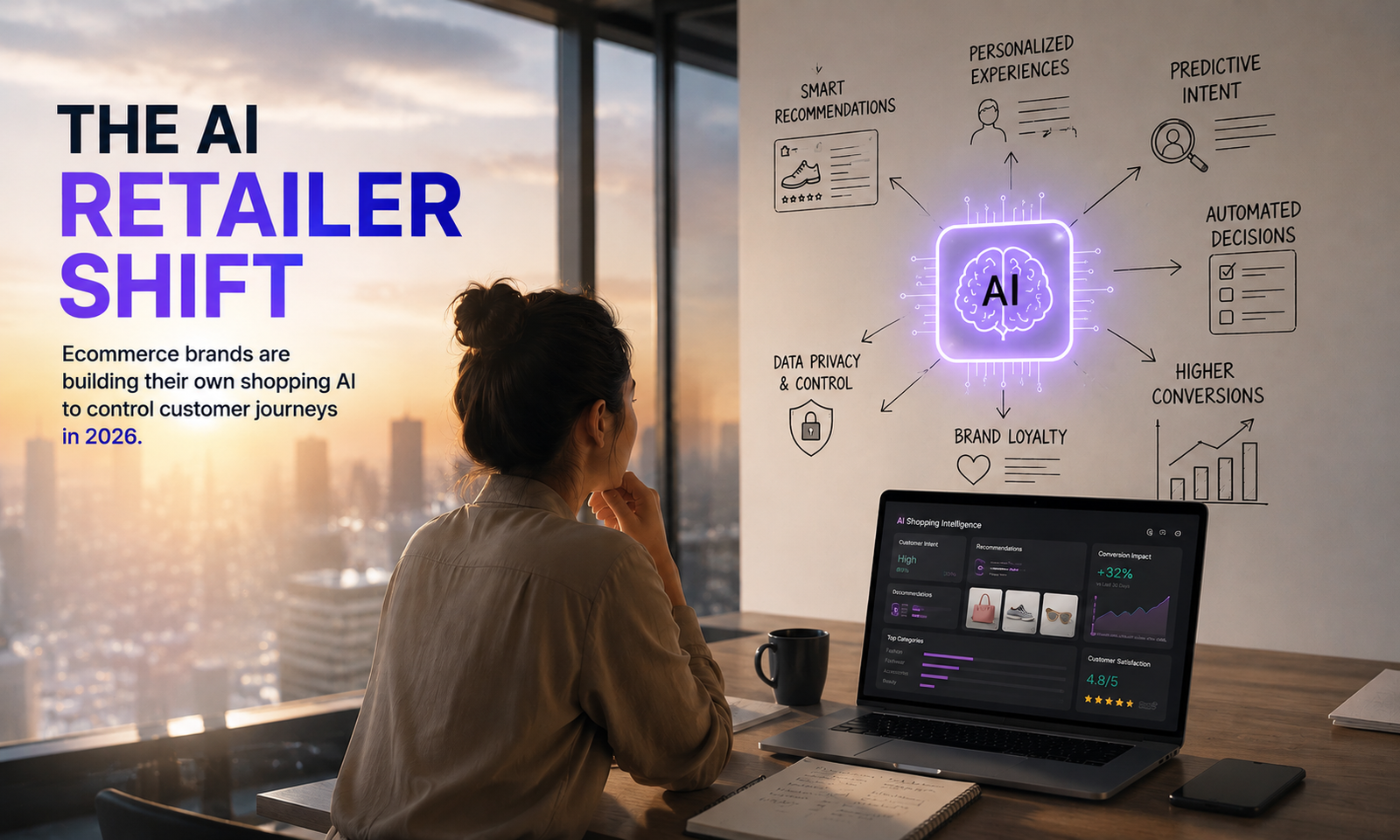
The trend of ecommerce is about to take a new turn in 2026. Online retailers have been playing a game of cat and mouse with these positioning strategies over the years – search, social media, marketplaces, paid advertising, and product recommendations. But another layer of discovery and buying customers will be changing is shopping AI. While AI can merely facilitate consumers to locate products, it can also recognize their tastes, contrast products, answer inquiries, suggest options, and more. AI is now becoming more capable of attracting consumers to the final purchase.
With this move, ecommerce brands are more inclined to create their own AI shopping experience, and not rely on just Google, Amazon, social platforms or third-party AI assistants. AI is being used by retailers as a direct sales channel to customers.Retailers are starting to consider AI as a way to sell directly to their customers. The outcome is a shift from conventional ecommerce websites to smart online stores that can comprehend individuals and react to their certain requirements.
From Product Pages to Intelligent Shopping Experiences With Ecommerce
Much of ecommerce relies on the knowledge that customers have of what they desire. A customer looks up a product, filters them, views product details, makes price comparisons and then checks out. AI upends that process by enabling customers to tell their requirements in a natural way.
Shopify AI can go beyond keywords and grasp intent.
However, a customer can type in “running shoes” while an AI shopping assistant can understand a more comprehensive query like “I am looking for lightweight running shoes for long-distance running that are in my budget for running in cold and rainy weather.” So, retailers are no longer stuck on relying on keywords to recommend products, but can now take the next steps and focus on intent-driven shopping.
What Retailers Can Do With First-Party AI.
By creating an AI shopping system that stores all the information in-house, ecommerce businesses will have more control over product data, brand messaging, customer interactions, and product recommendations. Retailers can build an AI layer, not based on products from a third party, but on their own products and customers, so they don’t have to rely on a third party platform to control the discovery process.
Retail AI Stack Becomes A Different Competitive Edge
Shopping AI is more than just the introduction of an AI chatbot into an ecommerce platform. Leading retailers are integrating AI into their product catalogs, customer information and data, inventory, pricing, reviews and recommendation engines.
- Product intelligence: AI can comprehend the product specification, features, usage, and compare multiple products that are similar.
- Customer-specific suggestions: Shopping assistants can tailor suggestions to the preferences and experiences of the customer.
- Inventory awareness in real time: AI can suggest products that are in stock, and not redirect customers towards unavailable products.
- Conversational discovery: Customers don’t have to go through dozens of category pages and filters to ask detailed questions.
- Shopper assistance: AI can compare options, identify what’s suited to those that are looking to purchase and push them towards checkout.
AI Can Make Your Customer Data the Shopping Context.
The first and foremost benefit of a retailer-owned AI is what it can bring to the table: context. Possibilities for a shopping assistant are to incorporate product information into a customer’s preference, previous interactions, browsing behavior and the customer’s current shopping intent. This is much more personalized than the type of products they recommend.
Product Data Quality is Gaining in Significance
Inaccurate or incomplete product data can have a direct impact on recommendations if AI is used for the discovery of the products. Retailers need to have consistent, accurate and up to date pricing, availability, specifications, shipping, reviews and product characteristics. Whereas the AI-powered store is not just about website product information, it’s about product information as a decision-making tool.
Retailers Can Create Their Own Brand-Specific AI Personality
An AI that’s owned by the retailer can also embody the tone and positioning and a company’s customer service values. A high-end fashion brand might need an AI fashion stylist, whereas an electronics store could benefit from an AI product advisor.For a high-end fashion brand, an AI fashion stylist might be in demand, but for an electronics store, an AI product advisor could be more suitable. This gives brands the opportunity to offer a more unique shopping experience rather than a generic chatbot that’s present across all websites.
AI can lessen reliance on traditional discovery channels.
While search, marketplaces, social and advertising platforms are impacting and will continue to impact retail, retailers are increasingly looking to have their customers come to them, directly, into their intelligent shopping environment. An AI assistant that provides answers to questions, product comparisons, product recommendations, and even assists with buying, can turn the ecommerce website into a great discovery tool.
The new battle is over who is the recommended brand.
As AI becomes a more significant factor in the process of product discovery, relevance, trustworthiness, affordability, and appropriateness of a brand to a customer’s request could be important factors in determining visibility in the product discovery process. This is a fresh way of ecommerce competition for the brands where they should not only optimize for human shoppers and search engines, but also for a new type of search engines: the ones powered by AI.
How to get ready for the AI Retailer era as Ecommerce Brands.
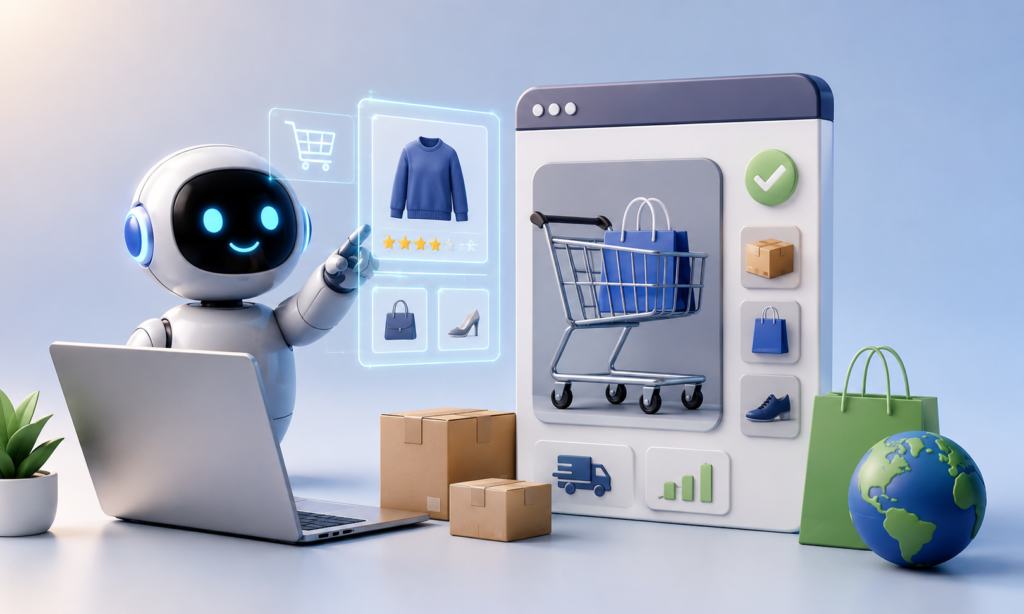
It’s not enough just to integrate an AI language model into a retailer’s website to create an effective shopping AI. The technology has to have solid commercial data, thorough product information, and secure integrations and recommendations. Brands will benefit from producing these foundations early to generate more meaningful customer experiences with AI shopping, without the risk of misinformation or bad recommendations.
Conclusion
The AI retailer brand change is revolutionizing the nature of an ecommerce store. Rather than give customers the option to shop by themselves, search, browse, compare and decide, brands could engage in the customer’s buying journey with the help of AI. The products, context, first-party data and conversational experiences that can be tied together and leveraged to create a competitive advantage are going to be more important in 2026. By developing AI that offers value to customers, ecommerce brands can future-proof themselves for a future in which intelligent recommendations play a growing role in what customers are finding—and purchasing—and they are worth their weight.
FAQs
1. What is a shopping AI?
Shopping AI is a revolutionary new technology that uses artificial intelligence to guide customers in the process of finding, comparing, analysing and buying products in a personalised and conversational way.
2. Why are ecommerce brands building their own AI?
Brands are starting to create their own AI to manage the customer experience, create personalized recommendations, leverage first-party data, enhance product discovery, and lessen reliance on third party platforms.
3. What are the applications of shopping AI in ecommerce?
The shopping AI can help to make the product discovery process quicker by comprehending the intention of the customer, answering product inquiries, comparing products, recommending similar products and helping customers while they are making a purchase.
4. Does shopping AI supplant classical ecommerce websites?
No. Shopping AI will likely be added as an intelligent layer on top of ecommerce platforms, assisting consumers to better navigate the product and service offerings and to streamline the process of shopping for goods and services, while traditional stores do shopping and product information.