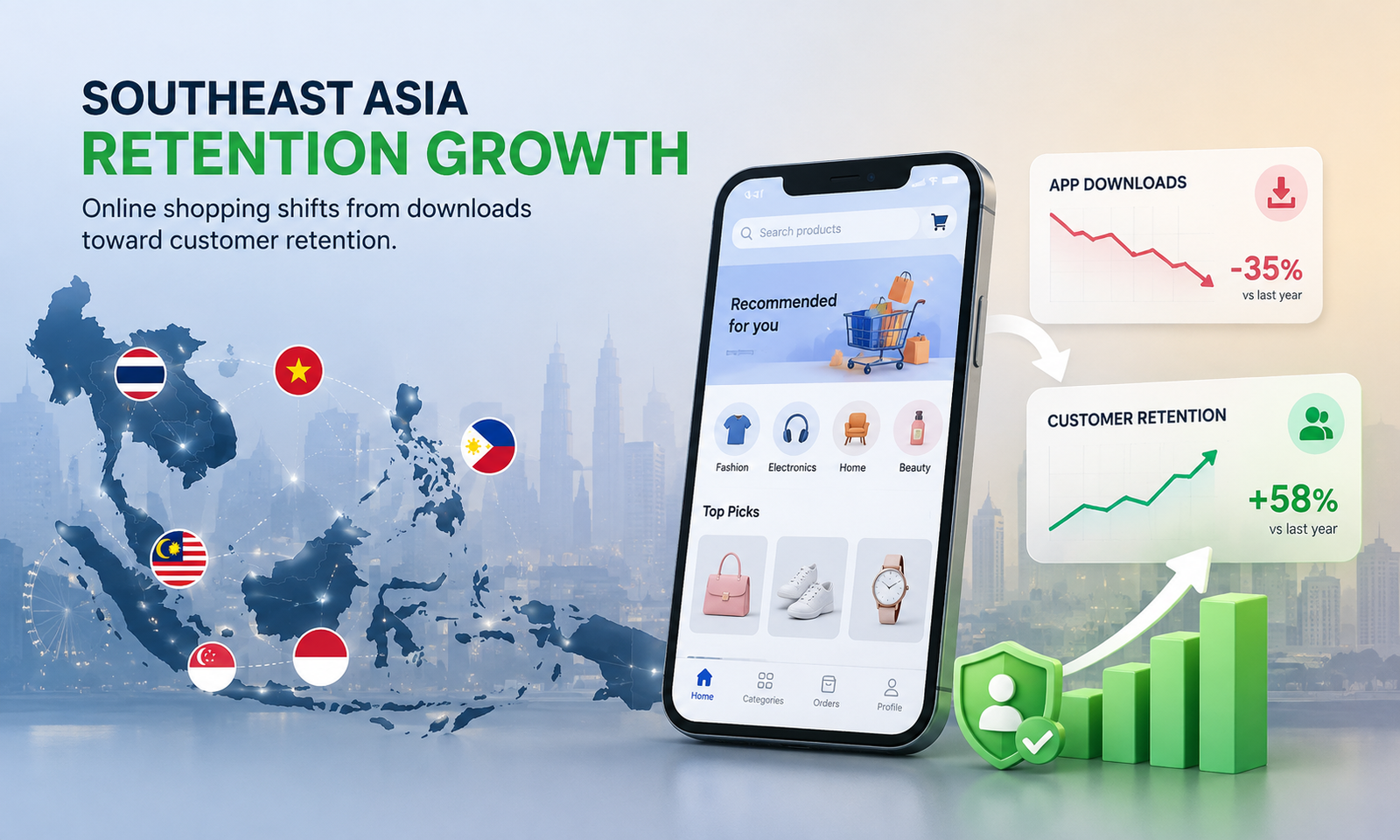
The e-commerce industry in Southeast Asia is going through the transition from its infancy to maturity. Gone are the days of paying a lot to get new customers to download an app, offering promotion codes or discount codes, or providing rewards for their first purchase. A lot of effort has been put into acquiring new customers to download an app, to send promotion codes, to sell discount codes, and to offer rewards for their first purchases, which all take a lot of money. However, with more and more people installing apps and their costs rising for customer acquisition, it isn’t enough just to get people to install your app.
Retention has become the next great focus point in the e-commerce growth journey, making one-time buyers repeat customers to a particular website. The transition is even more significant in the Southeast Asian markets, as the consumers have quickly embraced mobile commerce and now have a myriad of platforms to select.
App Downloads to Customer Retention
E-commerce in Southeast Asia (SEA) started to grow in the early days, and downloading apps was a key growth indicator. As the number of installations began to increase, a platform was starting to gain attention and was developing potential customers.
Today, there is only a part of it with a download. Because there are a number of shopping apps that a customer can install but only make purchases from 1 or 2. This indicates that e-commerce companies must comprehend what occurs once it has been installed.
No Longer Enough Downloads
Some examples of activities that can be used to acquire a new customer include advertising, promotions, free shipping, influencer marketing, and more. When that customer buys once and never again, it could be difficult for the company to make the sales and get their money back.
When the equation is changed by retention, it’s all a different story. A return customer will already be familiar with the website and how payments are made on the site and may have already saved delivery information or preferences. So, promoting a repeat sale may prove to be more efficient than having to continuously acquire new customers.
Southeast Asia’s E-commerce Market Is Becoming More Competitive
The region of Southeast Asia presents a variety of and quickly growing e-commerce markets, such as Indonesia, Thailand, Vietnam, Malaysia, Singapore, and the Philippines. But today, consumers demand convenience in shopping, quick delivery, shopping options, flexible payment methods, customization suggestions, and competitive pricing.
It has made the digital marketplace very crowded, and it is no longer possible to presume loyalty of the customers.
Consumers Have More Choices
It will take shoppers just a matter of minutes to do a price comparison on different platforms. These also can find products via social media, marketplaces, live shopping, search engines, and messaging platforms.
Since there is an easy transition between platforms, it’s important to have compelling reasons for customers to return to your e-commerce site. Although a competitive price is still relevant, other things like product discovery, reliability, service quality, customer loyalty rewards, and personalization are now playing a role in repeat purchases.
Personalization Is Becoming a Retention Engine
Personalization is one of the most significant chances for e-commerce companies. Rather than display a uniform selection of products and offers to all customers, platforms can leverage customer purchase history, website browsing habits, likes/dislikes, and engagement metrics to create more relevant customer experiences.
AI Can Improve Repeat Purchases
AI can aid in suggesting products for e-commerce sites that are based on past purchases and browsing habits. It can also detect customers who are likely to get disinterested and send out targeted offers and/or reminders.
For instance, a platform could suggest additional product line purchases after folks have bought a product or remind them when they are probably purchasing a product that they have bought previously. These experiences can increase the value of the platform and provide further opportunities for resales.
Beyond Discounts, Loyalty is Moving
One of the popular strategies to lure the Southeast Asian e-shoppers has always been the discount. But permanently depending on the change of price can run down the margins and make customers less loyal toward the actual brand.
Great for the Value For Money
Loyalty points, exclusive access to products, customization, membership privileges, quicker delivery, better customer support, and the earliest access to big sales are just a few of the modern methods of retaining customers.
To build an ecosystem where your customer will be satisfied with the product and won’t be constantly looking for other alternatives.
Social commerce is transforming retention strategies.
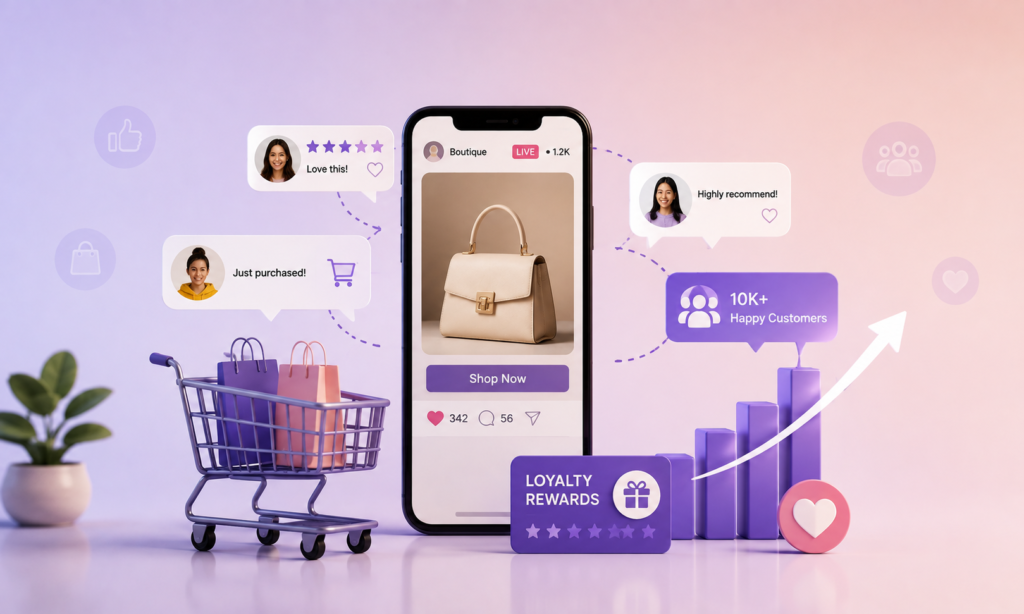
Social commerce is another big driver that is impacting e-commerce behaviors in Southeast Asia. Consumers are finding products more and more via short videos, creators, live videos, and recommendations from the community.
From discovery to lasting connections.
The initial sale may come out of a social interaction, but e-commerce businesses have to come up with a way to get that customer to come back. Personalized notifications, communities, loyalty programs, recommendations, and post-purchase engagement can all help to convert one-off social shoppers into repeat buyers.
What E-commerce Companies Should Measure.
With the industry moving from acquisition to retention, companies must alter the metrics that they’re focused on.
Important Retention Metrics
To track customer engagement, e-commerce businesses can track customer retention rate, repeat purchase rate, CLV, purchase frequency, AOV, churn, and engagement instead of the main focus being downloads.
These metrics can help you gain insight into the sustainability of platforms to build customer relationships.
The Future of Ecommerce Growth in Southeast Asia
Rather than just download numbers, the next wave in Southeast Asian e-commerce will be determined by the volume of people that use the application. Whether platforms will be able to successfully convert users into repeat customers to spur sustainable growth depends on how well they can do so.
Companies that know how to tailor shopping experiences to their local market and create value-based loyalty programs, offering reliable service and user experience, will have better prospects to retain a customer.
Frequently Asked Questions
1. What is driving increasing customer retention in the e-commerce industry in Southeast Asia?
As more and more people are seeking to acquire customers, customer acquisition costs can become high. Keeping customers loyal can help you to get repeat sales and not have to continually invest in getting new customers.
2. Are e-commerce app downloads still important?
Yes. While downloads can still serve as a complementary marketing tool to grow the customer base, they are not enough to be a growth indicator. It’s also important to know whether or not downloaded applications are being used and if users are repeat customers.
3. What are some ways that e-commerce platforms can help to retain customers?
Platforms can enhance retention by customizing and personalizing, offering loyalty programs, ensuring delivery, providing competitive service, making recommendations relevant, offering payment options, and communicating with customers in a relevant way.
4. How can AI be used to improve e-commerce retention?
AI can scan the customer behavior and help the platform make more relevant suggestions, detect a customer’s potential churn, optimize offers, and make more relevant shopping experiences that will make the customers return.
5. What will be the role of discounts in e-commerce in the SEA region?
Loyalty and discounts will still play a major role in the decision-making process, but all based on discounts will lead to reduced profits and loyalty. Promotions are being packaged with other elements of service, personalization, convenience, and loyalty increasingly combined on successful platforms.