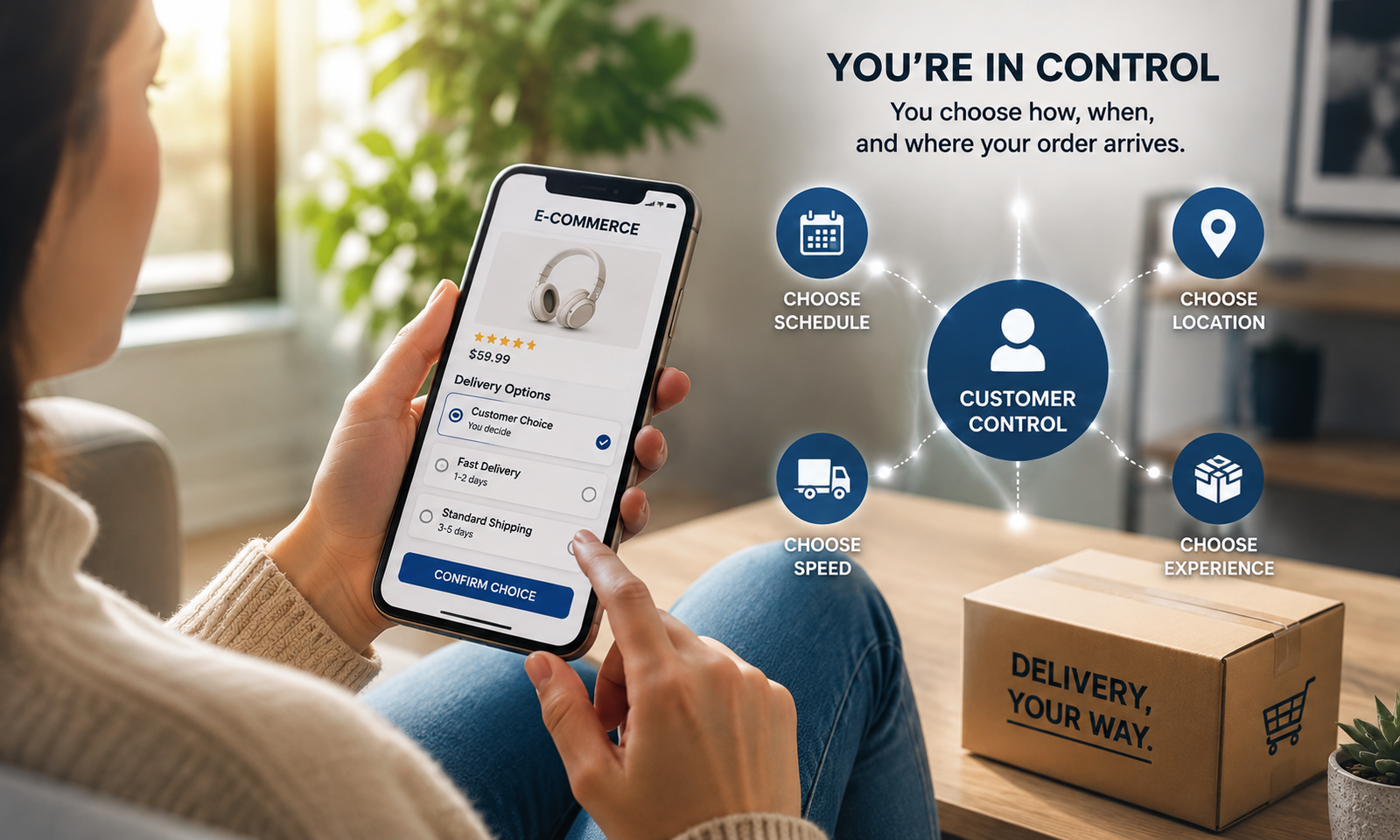
Free shipping is a conversion tactic that has been one of the better ones for e-commerce for years. Online consumers became more aware of delivery costs, and retailers have eliminated those costs to make shopping seem less expensive. However, things are changing in the e-commerce world. Customers who are more concerned about control, flexibility, transparency, and convenience will not simply be satisfied with free shipping.
Modern shoppers want to know when, where, how, and which deliveries to order; how to return orders; and when and if they can. This change is creating a new e-commerce battleground, where customer control can be more valuable than just free delivery.
The checkout process is evolving to a control center.
The contemporary checkout isn’t simply the last step prior to the payment transaction. It’s fast becoming a choice-making arena where consumers want to have options and not a one-size-fits-all delivery guarantee.
- The flexible delivery windows provide shoppers with more scheduling control.
- Several fulfillment methods meet various customer needs.
- Clear delivery information decreases the uncertainty prior to paying.
- Easy changes to support unforeseen schedule conflicts.
Free delivery is not a cure-all solution to customer problems.
While free shipping is a great thing for a customer, they may be happy with it, but if the package arrives at an inconvenient time, they may be irritated. If you work during the day, you may want to order at night; if you want to see your order as soon as possible, you may want to order early. Free shipping does not necessarily mean convenient shipping; it deals with costs.
This separation of the real from the virtual is more significant as consumers get used to a more flexible digital experience. Customers may want to have some control over fulfillment as well if they can have some control over the product they’re going to buy, how to pay for it, etc.
Speed, Timing, and Convenience Are Different
Logistics with short delivery times have always been put at the forefront of e-commerce benefits. But not all the time speed is the most critical. A customer ordering a gift for their birthday might want it to be guaranteed by a certain date, whereas a customer ordering household supplies might want to get them at a lower price—delivered by a certain date.
By allowing control, customers can be served both needs by the retailer. Rather than making all the buyers fall into the same delivery system, e-commerce brands can provide the buyer with the choice of delivery depending on their urgency, price, or time.
The control equation includes returns.
But customer control doesn’t end with the receipt of the order. Retailers can significantly impact the trust of consumers in an e-commerce brand with their returns. It can cause frustration if they have complicated return policies, unclear expectations for return times, or only a few options available for returns.
A better customer experience provides an integrated delivery and returns process. It is important to communicate to customers when the products they buy can be returned, where they can drop off products to be returned, and when they will receive a refund or an exchange.
E-commerce brands are reshaping the customer’s choice.
Customer control has made the fulfillment process a customer experience, not just an operational process, and as such, retailers must reimagine fulfillment. Businesses that offer consumers helpful options but don’t add on unnecessary complexities can build better connections with customers.
- Different delivery options may indicate varying priorities of the customers.
- It’s important to have order tracking that offers relevant real-time data.
- Having choices for pickup can lower reliance on delivery for consumers.
- Clear and transparent policies can boost trust during checkout.
Personalization is Not Just About Product Recommendations.
Personalization has been limited to displaying products to people that they are likely to buy when it comes to e-commerce personalization. The next step can be customization of the manner in which such products are delivered to the customer.
A customer who frequently orders on weekends may, for instance, be eligible to automatically get that same option when ordering. An express fulfillment might be emphasized for another customer who places a priority on speed. This allows all fulfillment data to be part of the customer experience.
Technology provides more responsive fulfillment.
New e-commerce technology, logistics solutions, inventory solutions, and artificial intelligence (AI) are all advancing the possibilities for flexible fulfillment. Retailers can integrate their customers’ preferences, stock location, delivery capabilities, and orders to make more flexible decisions around fulfillment.
AI can also assist in forecasting delivery needs, figuring out any potential delays, and suggesting relevant fulfillment choices. In working well, these systems provide customers with increased visibility, without requiring them to know the complicated logistics that are in play behind their orders.
The Reason Free Shipping Is Not the Full Value Proposition.
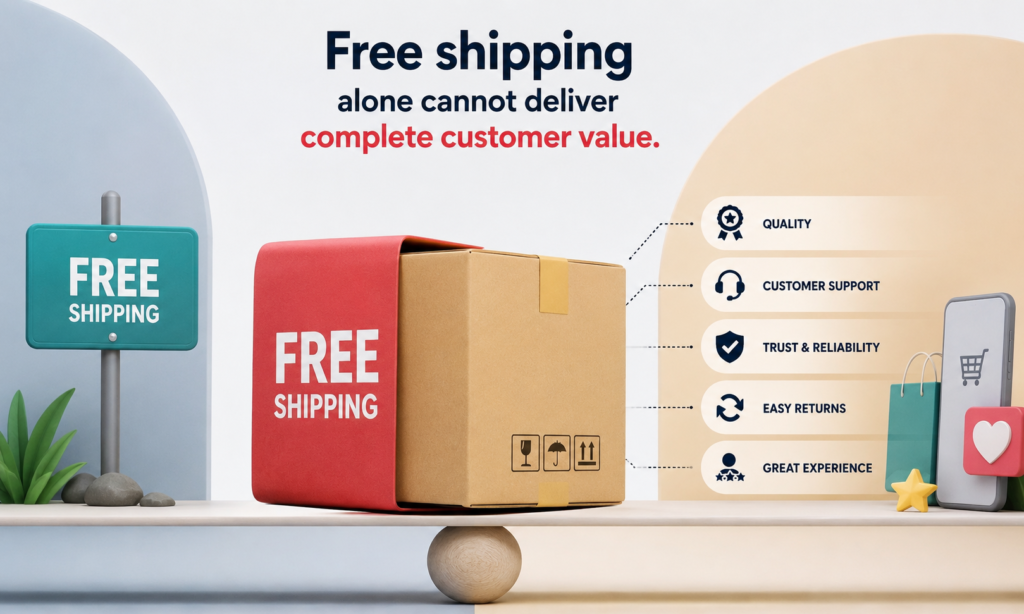
Free shipping will continue to play a big part in ensuring that customers don’t abandon a shopping cart, particularly for those who are motivated by price and seek quick delivery, but it’s growing in complexity. Absorbing shipping costs is a decision that retailers will have to make: Does this benefit the whole customer journey?
A more effective approach might be putting together flexible fulfillment and competitive pricing. If there is a legitimate problem to be fixed, then a small charge could be made for a particular time of delivery. Another shopper might want to be shipped at no cost but at a slower speed.
Conclusion
FREE shipping isn’t the only thing the eCommerce shipping war boils down to. Delivering both on-time and on-demand delivery and providing customers real-time visibility of their orders are just some of the areas where they are looking to have more control over the entire fulfillment process, including return and pick-up options.
Free shipping is still a good way to get customers, but customer control can provide even greater value. Retailers can stand out from the competition in an overcrowded market through clear messaging, flexible delivery options, personalized targeting, and hassle-free returns.
Frequently Asked Questions
1. Does free shipping still matter in e-commerce?
Yes. Customers who make a comparison between retailers’ pricing still consider free shipping as a vital purchase incentive. But, it’s more and more only a piece of the total shopping experience. The flexibility of delivery, as well as the accuracy of the estimate, tracking, and convenient returns, can also impact the buying process.
2. What is the reason for customers to have greater control over delivery?
There are various levels of urgency, budgets, and schedules among customers. No one can be pleased with just one way of delivery. Empowering the shopper to choose what they want in terms of when, how fast, how they pick up, and how they want things fulfilled means they can pick one that suits them and their individual needs.
3. Is flexible delivery an effective way of enhancing customer loyalty?
It can. Providing regular and informative delivery details and helpful options can enhance the customer experience. When it’s easier to order and receive products, it could draw customers back to the retailers.
4. Do too many choices of shipping really control the customer?
Not necessarily. Rule of thumb: If it has more options, it can cause decision fatigue. The aim should be something that is flexible, not free-for-all. Retailers can leverage personalization and customer data to bring out the delivery options that are most suited to each customer.